
Math
Second Grade Math
What second graders learn in math, the skills to master by the end of the year with the Common Core and Texas standards, free worksheets sorted by skill, a quick check of where your child is, and games and routines for home.
Grade 2
Second grade math is addition facts from memory, fluent subtraction within 20, place value to 1,000, adding and subtracting within 100 and then within 1,000, equal groups and arrays, measuring with a ruler, telling time to 5 minutes, money, graphs, and halves, thirds, and fourths of a shape. By the end of the year, the Common Core expects a second grader to know every sum of two one-digit numbers from memory and to add and subtract within 100 fluently. Texas asks for the addition and subtraction facts within 20 “with automaticity”.
Second grade turns first grade’s strategies into recall, and first grade’s tens into hundreds. A child who worked out 8 + 7 by making ten in first grade knows it this year, and a child who built 46 from tens and ones now builds 462 from hundreds.
- What second graders learn, with the Common Core and Texas standards.
- Free 2nd grade math worksheets, sorted by skill, with answer keys.
- Is my child on track? A 10-question skill check.
- Games for home, time and money included.
- How often to practice, and how to help with homework.
What math do kids learn in 2nd grade?
By the end of second grade, a child is expected to know the addition facts from memory, read and write numbers to 1,000 as hundreds, tens, and ones, and add and subtract within 100 fluently. The table below gives the whole year of second grade math by strand, in the order most schools teach it, with the Common Core code and the Texas (TEKS) code beside each skill. A skill with a page on this site links to it.
| What children learn | Common Core | Texas |
|---|---|---|
| Addition and subtraction | ||
| Every sum of two one-digit numbers from memory (within 20) | 2.OA.B.2 | 2.4(A) |
| One- and two-step word problems within 100 | 2.OA.A.1 | 2.4(C)–(D), 2.7(C); within 1,000 |
| Add and subtract within 100, with regrouping | 2.NBT.B.5–6, 2.NBT.B.9 | 2.4(B) |
| Add and subtract within 1,000 with models | 2.NBT.B.7 | Within 1,000 in word problems, 2.4(C) |
| 10 or 100 more or less in your head | 2.NBT.B.8 | 2.7(B) |
| Place value | ||
| Hundreds, tens, and ones to 1,000 | 2.NBT.A.1 | 2.2(A); to 1,200 |
| Count to 1,000; skip count by 5s, 10s, and 100s | 2.NBT.A.2 | Skip counting is first grade, 1.5(B) |
| Expanded form | 2.NBT.A.3 | 2.2(B) |
| Compare three-digit numbers | 2.NBT.A.4 | 2.2(C)–(D) |
| Measurement, time, and money | ||
| Measure with a ruler in inches, feet, centimeters, and meters; estimate | 2.MD.A.1–4 | 2.9(A)–(E) |
| Whole numbers on a number line | 2.MD.B.5–6 | None |
| Tell time to the nearest 5 minutes; a.m. and p.m. | 2.MD.C.7 | 2.9(G); to the minute |
| Money word problems with bills and coins | 2.MD.C.8 | 2.5(A)–(B) |
| Area by covering a shape with squares | Third grade, 3.MD.C.5 | 2.9(F) |
| Saving, spending, and borrowing | Not in Common Core | 2.11(A)–(F) |
| Patterns, data, and the equal sign | ||
| Odd and even numbers | 2.OA.C.3 | 2.7(A); to 40 |
| Picture graphs, bar graphs, and line plots | 2.MD.D.9–10 | 2.10(A)–(D) |
| Multiplication and division | ||
| Equal groups and arrays to 5 by 5, as repeated addition; rectangles in rows and columns | 2.OA.C.4, 2.G.A.2 | 2.6(A) |
| Sharing equally (the start of division) | Third grade, 3.OA.A.2 | 2.6(B) |
| Shapes and space | ||
| Triangles, quadrilaterals, pentagons, hexagons, and cubes | 2.G.A.1 | 2.8(A)–(E) |
| Fractions | ||
| Halves, thirds, and fourths of shapes; equal shares need not look the same | 2.G.A.3 | 2.3(A)–(D); halves, fourths, and eighths |
The Common Core’s grade 2 introduction names four critical areas for the year: base-ten notation, fluency with addition and subtraction, standard units of measure, and shapes. The fact milestone is in 2.OA.B.2: “By end of Grade 2, know from memory all sums of two one-digit numbers.” Subtraction is asked for “using mental strategies” rather than from memory.
Texas differs from the Common Core in second grade in seven places. In the Texas standards, place value goes “up to 1,200” (2.2(A)) rather than 1,000; time goes to the minute (2.9(G)) rather than 5 minutes; fractions are halves, fourths, and eighths (2.3(A)), with thirds in third grade; odd and even go to 40 (2.7(A)) rather than 20; sharing objects equally starts division (2.6(B)); area starts by covering a shape with squares (2.9(F)); and money is coins “up to one dollar” (2.5(A)). Texas also teaches saving, spending, and borrowing in second grade (2.11).
Second grade is usually ages 7–8. The table describes where a skill lands by the end of the year, so a second grader who has not met time or money by November has simply not met it yet.
Free 2nd grade math worksheets by skill, with answer keys
These free second grade math worksheets are sorted by the skill they practice, in the order of the table above. Every PDF prints in black and white with no account and no email, and every practice sheet ends with its answer key and a page for grown-ups. Charts, mats, and cards have nothing to answer, so they have no key. Print the sheet for the skill your child is on now, which may be a tray above or below where the calendar says.
1. Addition and subtraction facts within 20
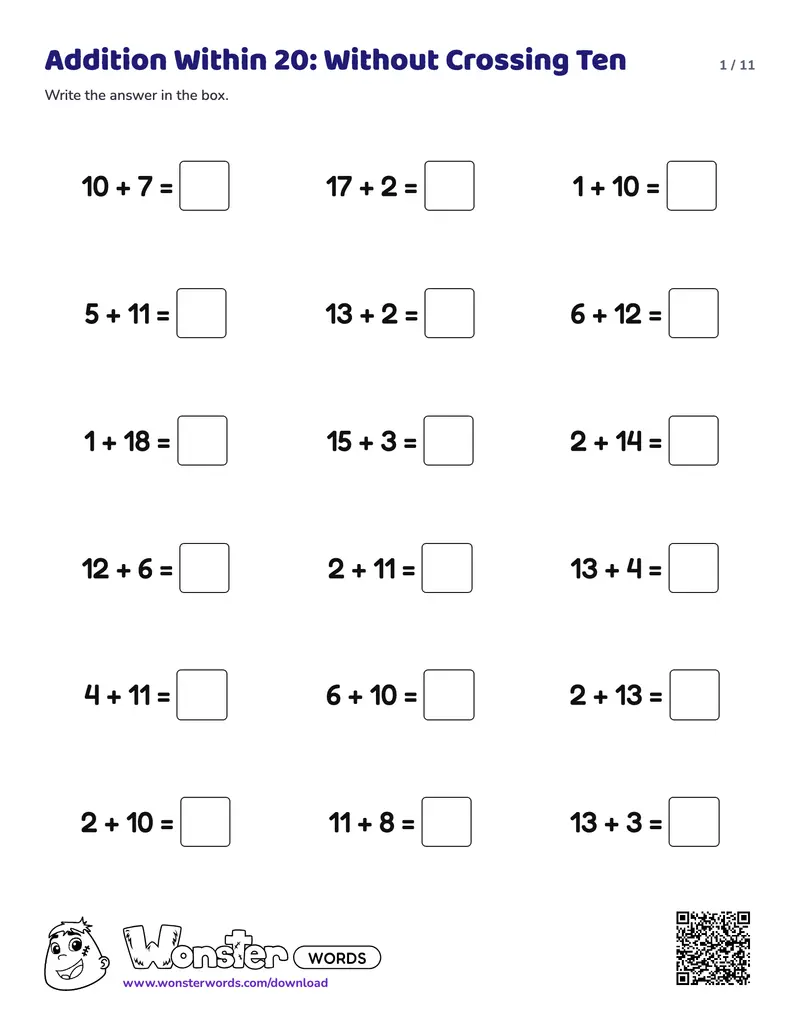
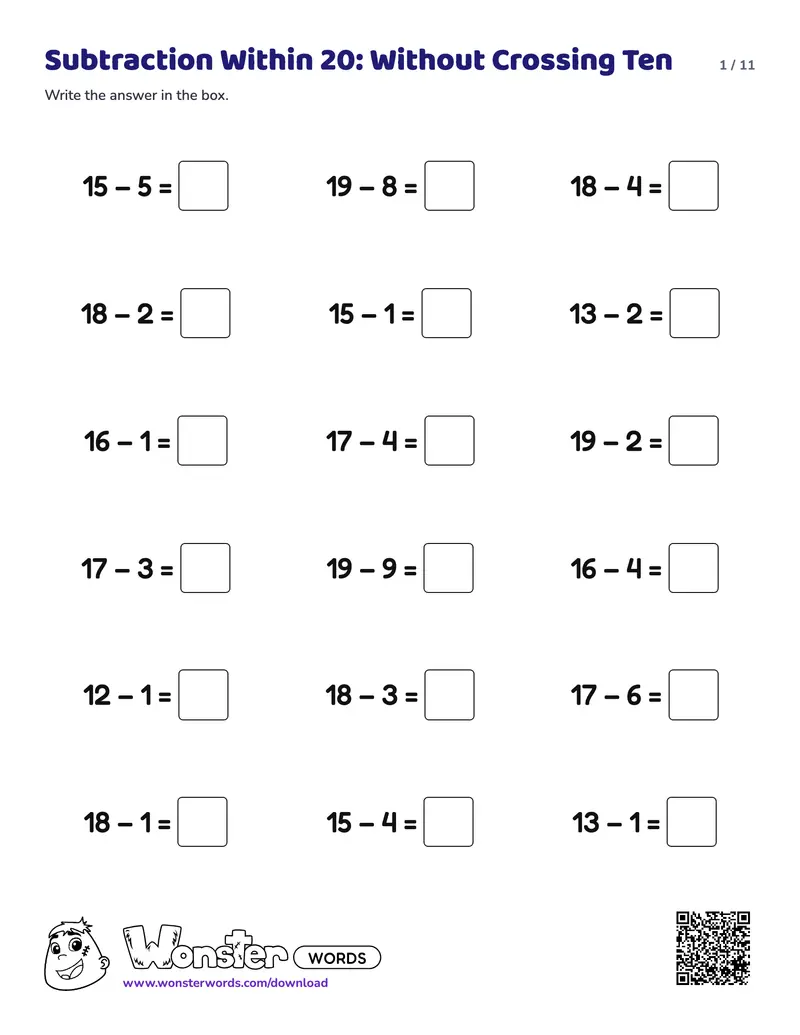
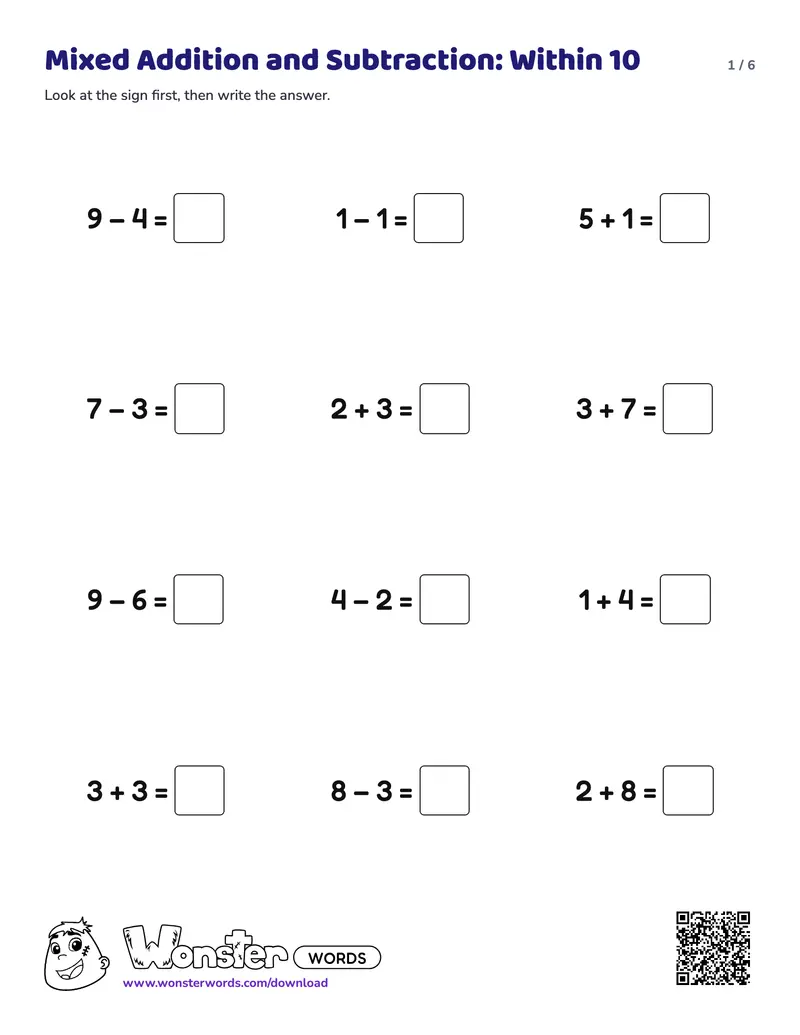
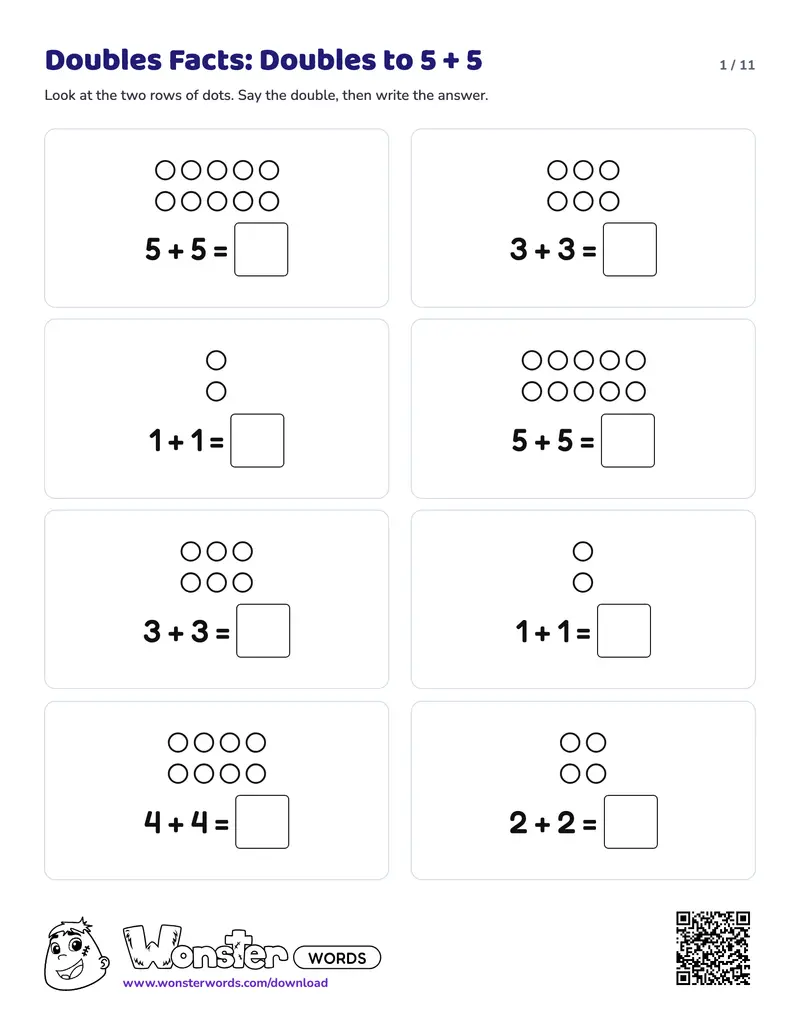
The facts come in strategy order: doubles and make ten first, turnaround facts and fact families to connect adding with subtracting, then the mixed sheets that ask for recall (2.OA.B.2). Math facts explains how a fact moves from worked out to known. For practice on a screen, our guide to math facts apps compares five.
Free PDF · no sign-up
Feedback?Free printable second grade addition and subtraction fact worksheets
Facts within 20, from doubles to the mixed sheets that ask for recall. Each PDF is free, prints in black and white, and ends with its answer key and a page for grown-ups.
- Addition Within 20 (PDF)144 problems · answer key included · 11 pages
Preview page 1Preview
- Subtraction Within 20 (PDF)144 problems · answer key included · 11 pages
Preview page 1Preview
- Mixed Addition and Subtraction (PDF)60 problems · answer key included · 6 pages
Preview page 1Preview
- Doubles Facts (PDF)76 facts · answer key included · 11 pages
Preview page 1Preview
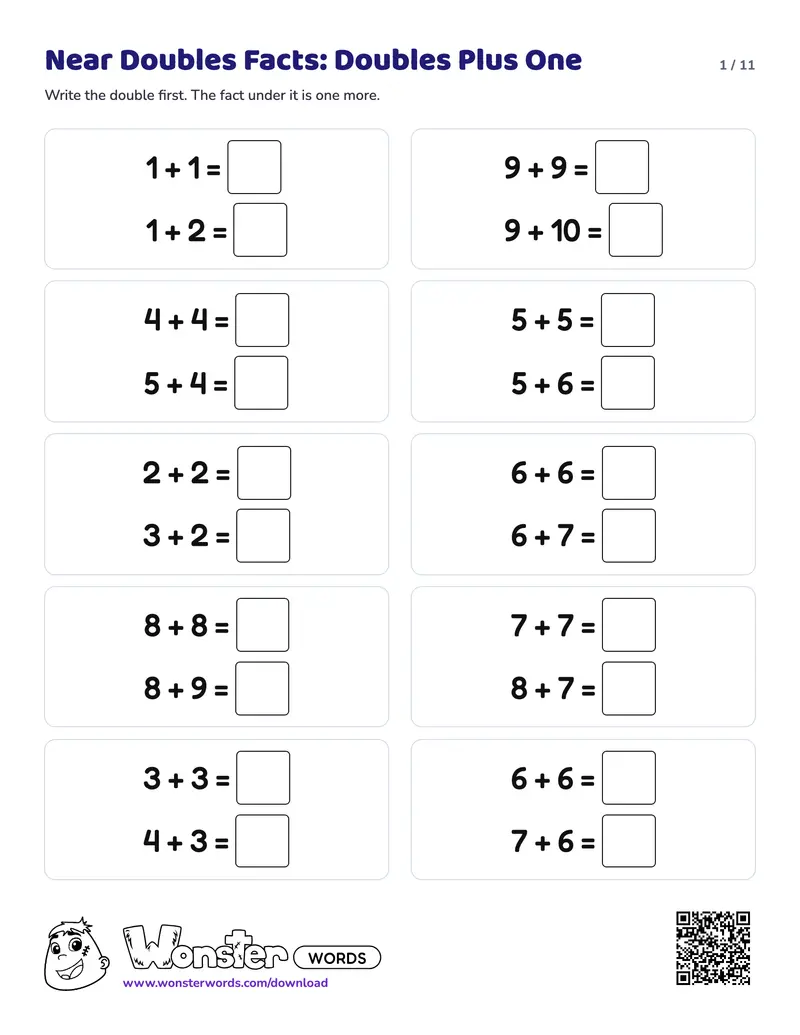
- Near Doubles Facts (PDF)84 facts · answer key included · 11 pages
Preview page 1Preview
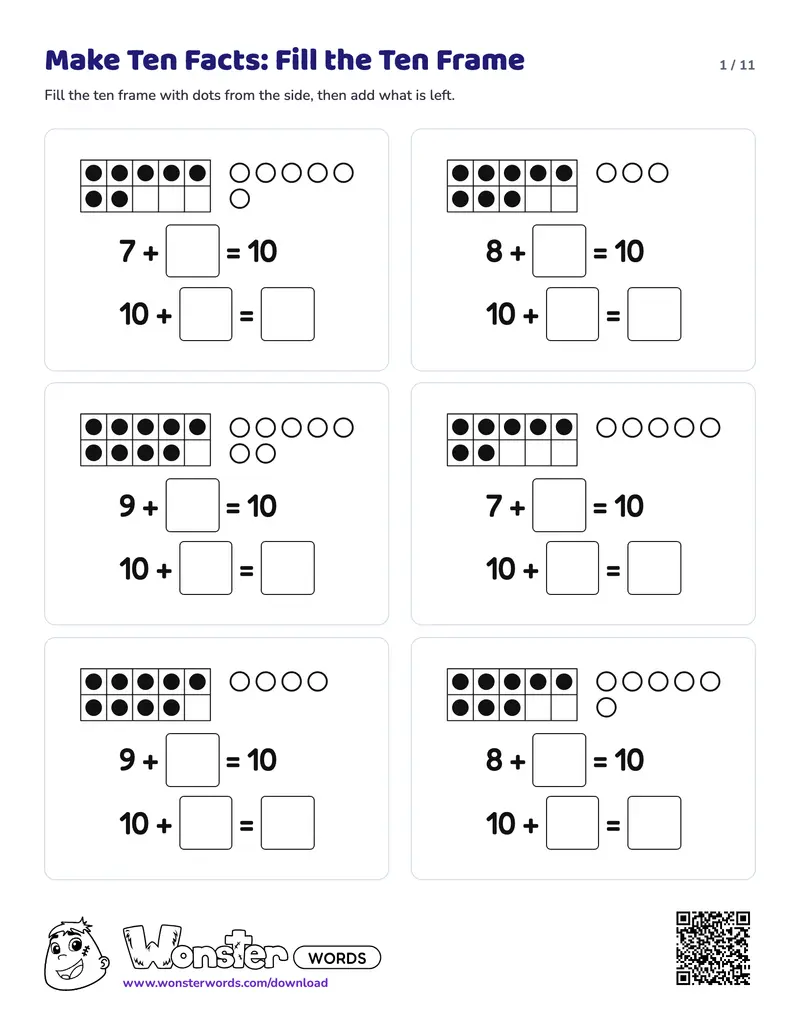
- Make Ten Facts (PDF)68 facts · answer key included · 11 pages
Preview page 1Preview
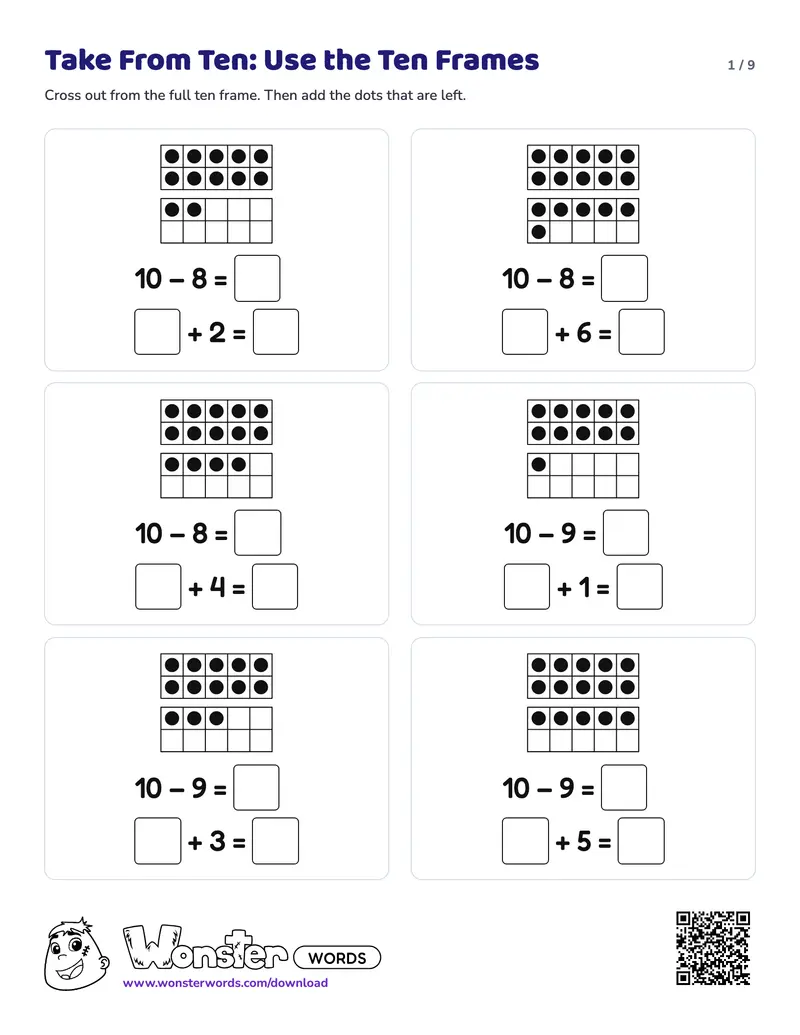
- Take From Ten (PDF)52 facts · answer key included · 9 pages
Preview page 1Preview
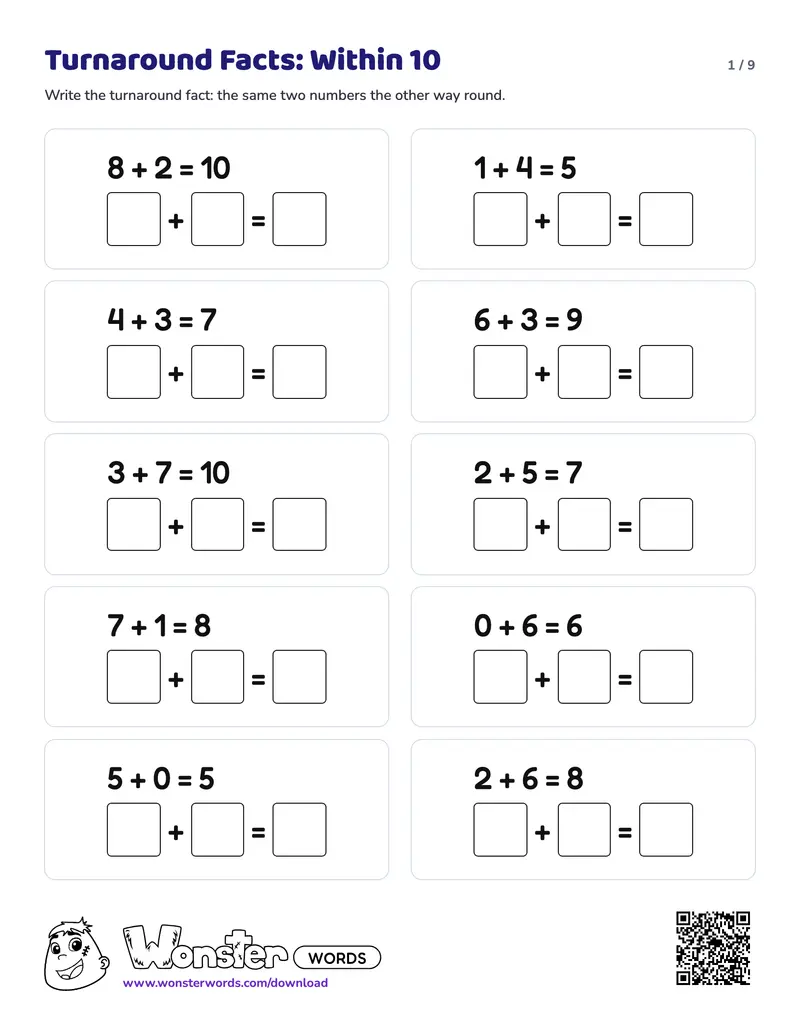
- Turnaround Facts (PDF)56 facts · answer key included · 9 pages
Preview page 1Preview
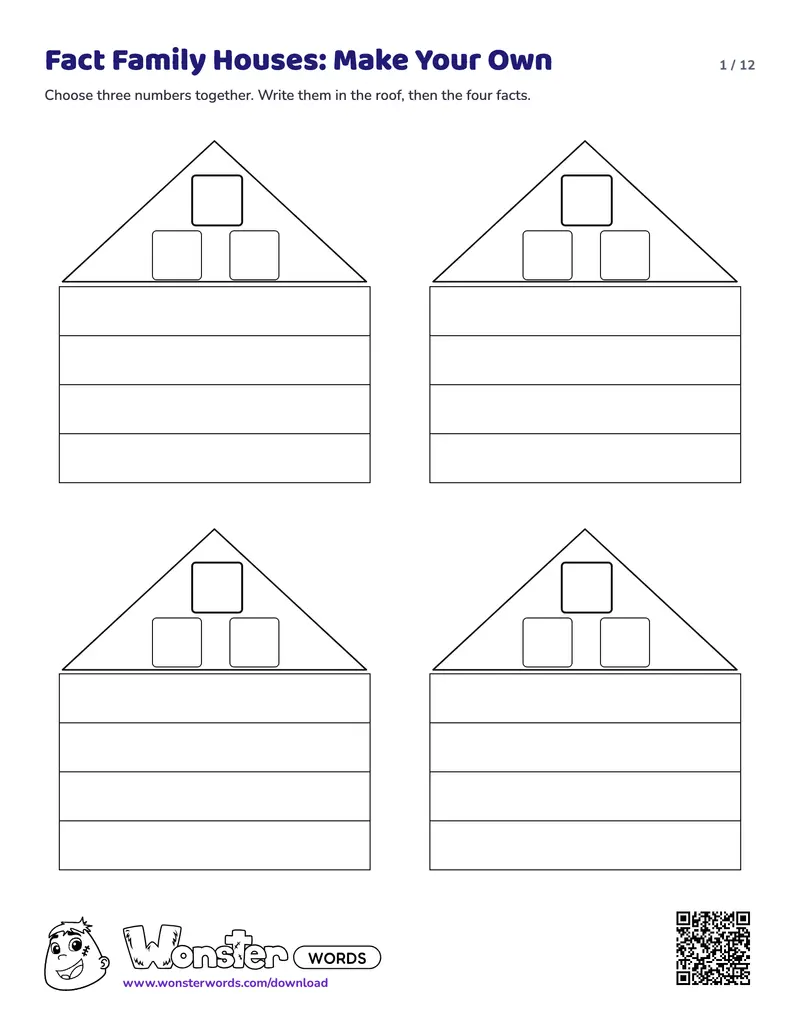
- Fact Family Houses (PDF)36 fact family houses · answer key included · 12 pages
Preview page 1Preview
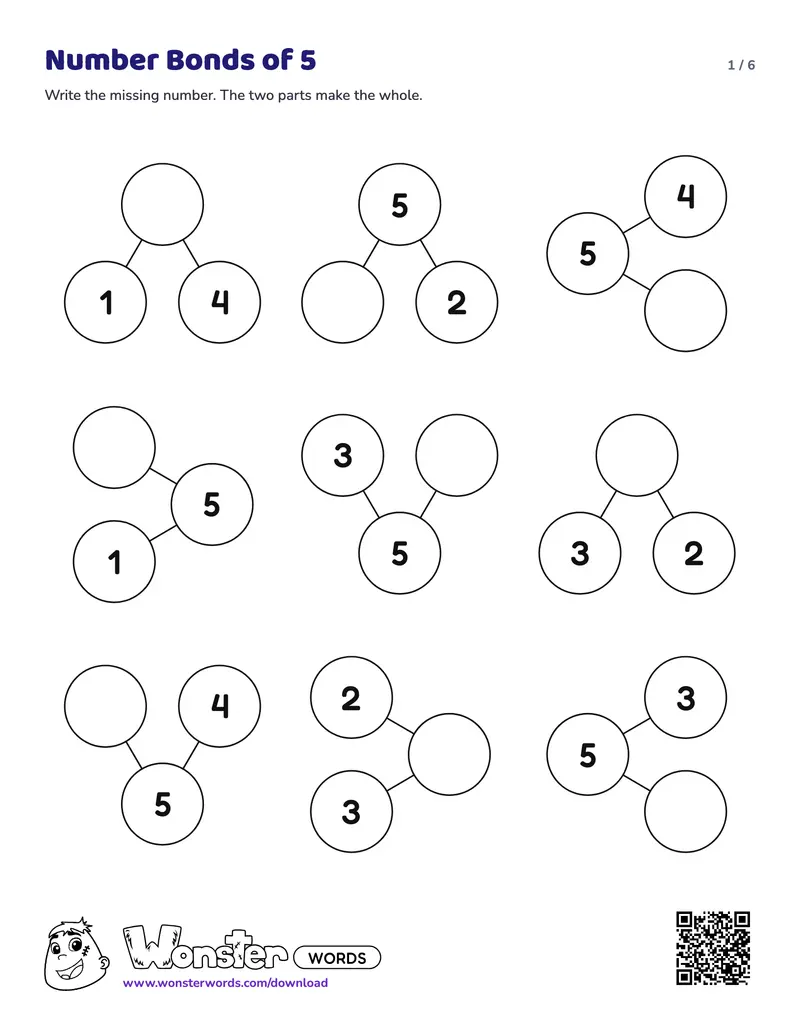
- Number Bonds (PDF)36 number bonds · answer key included · 6 pages
Preview page 1Preview
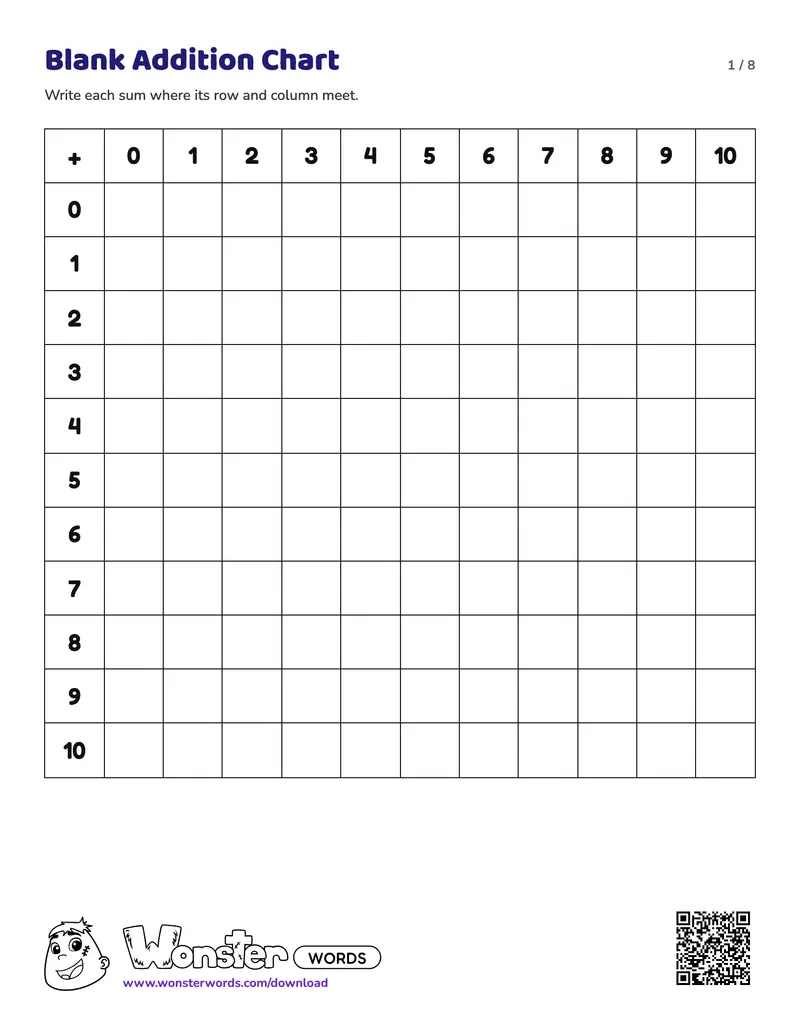
- Blank Addition Chart (PDF)227 facts · answer key included · 8 pages
Preview page 1Preview
2. Adding and subtracting within 100 and 1,000, and word problems
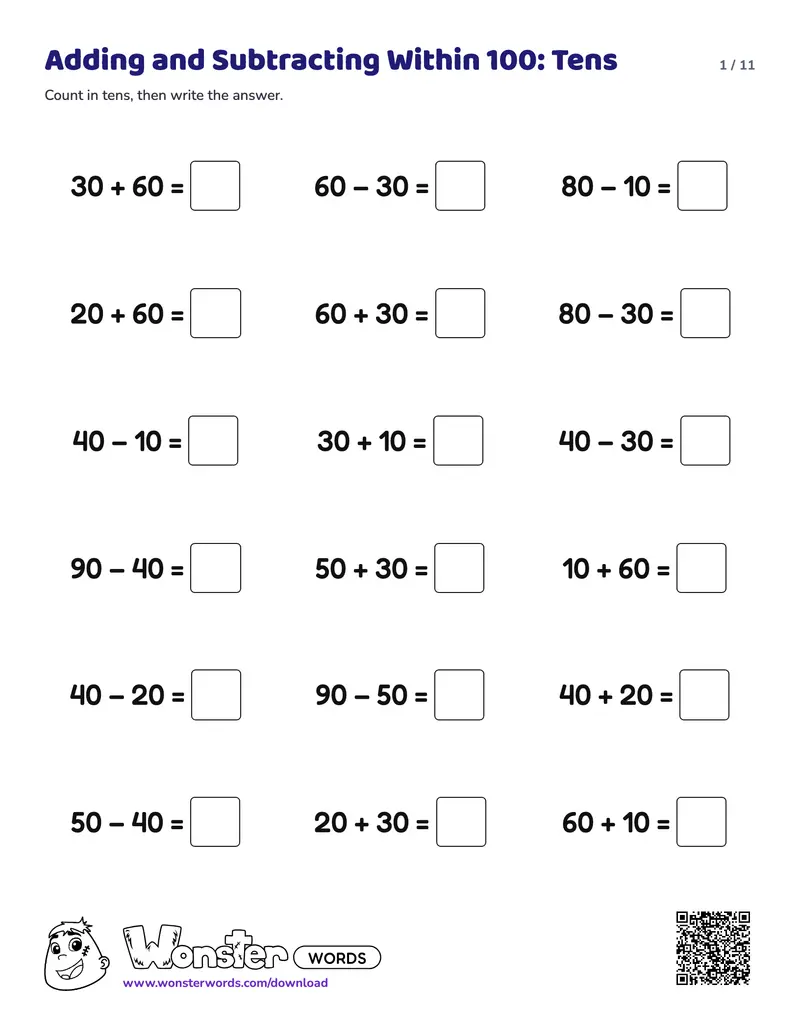
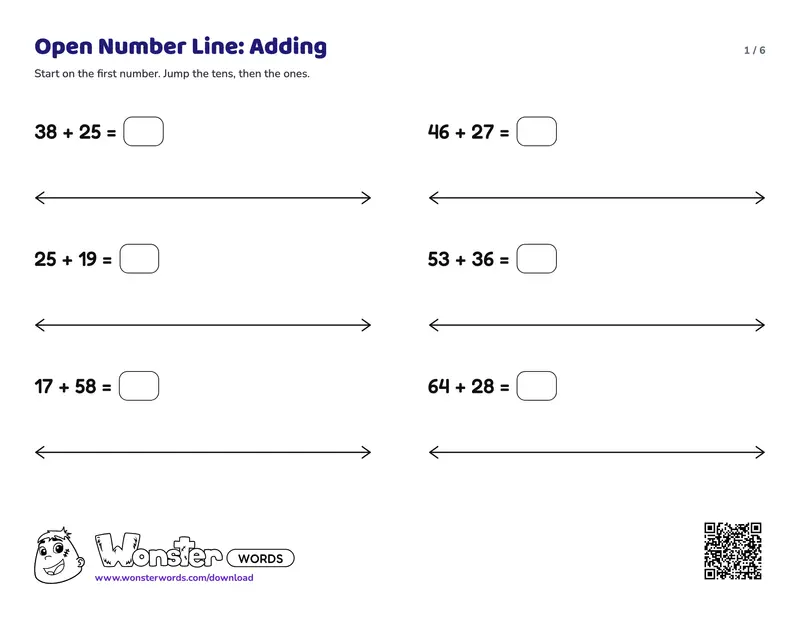
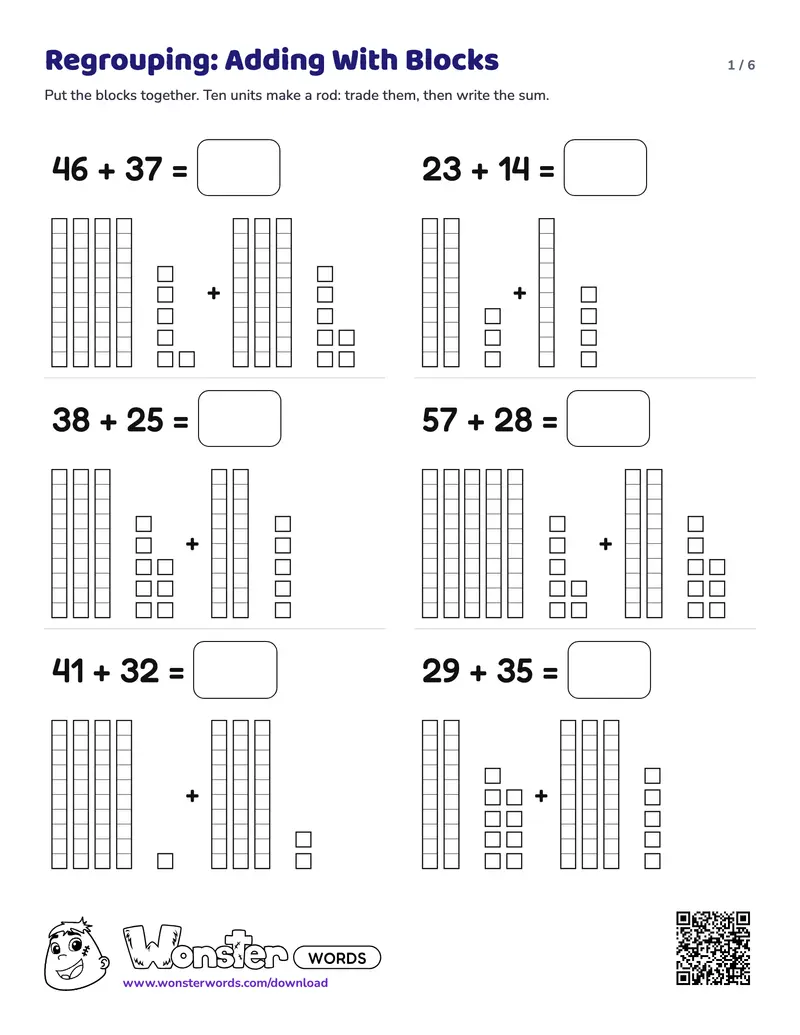
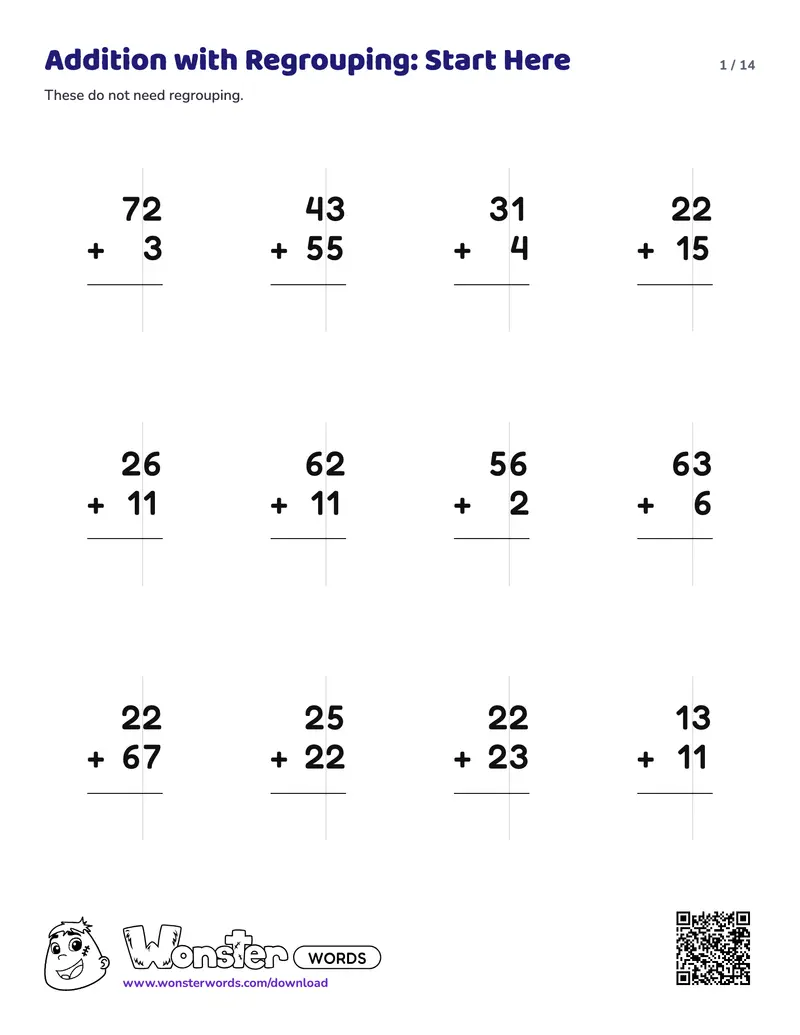
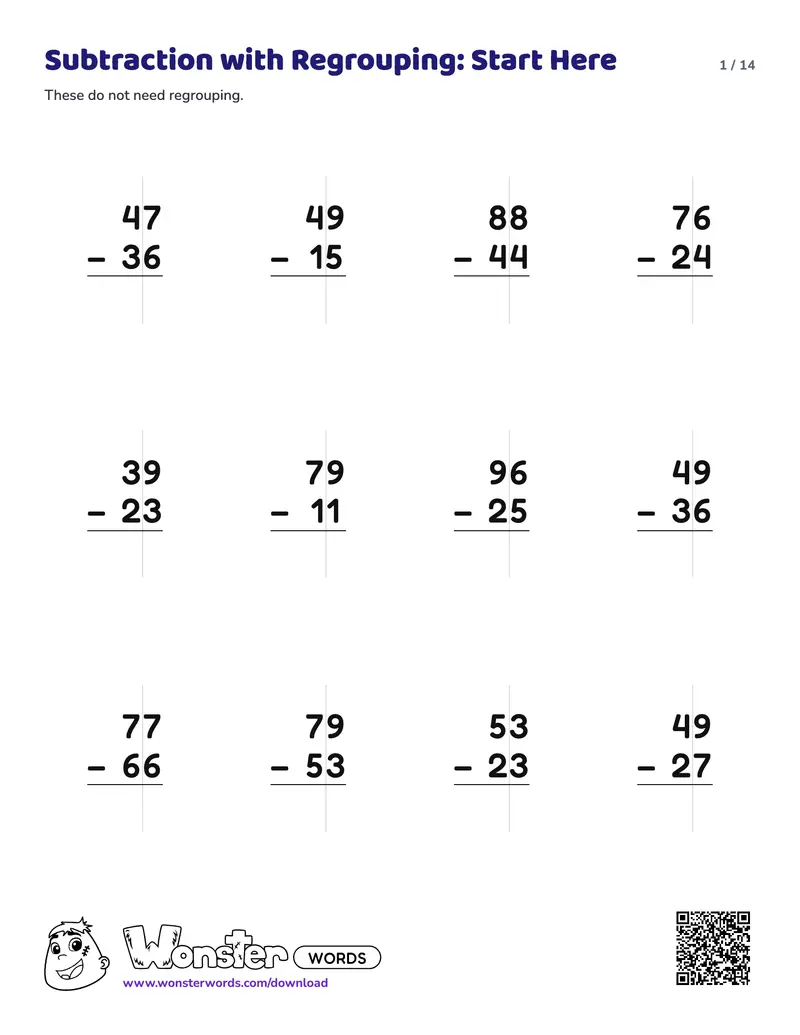
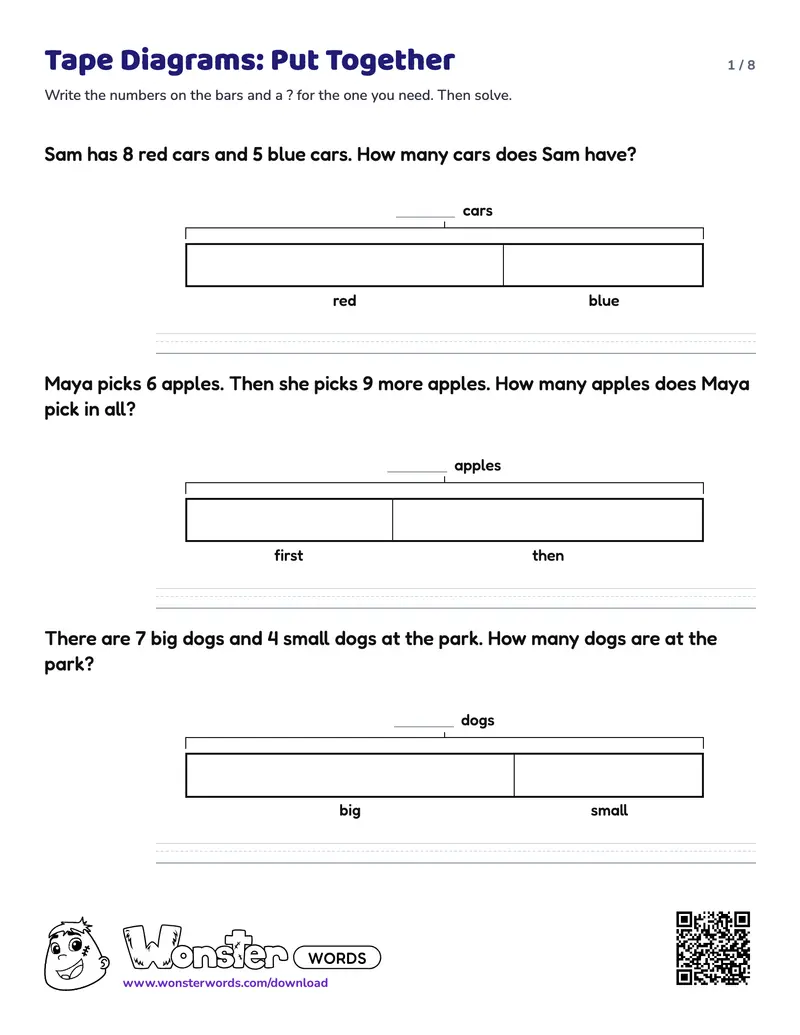
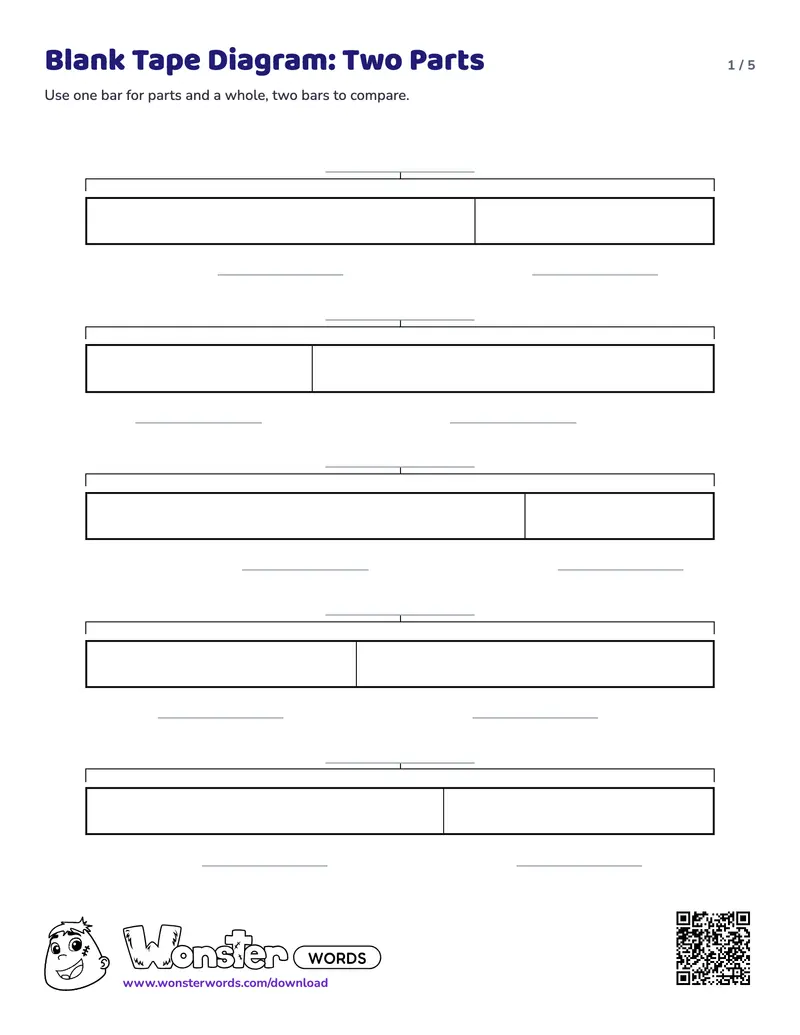
Start with pages 7–8 of Adding and Subtracting Within 100, which are second grade’s (pages 1–6 make a warm-up), then the open number line and the base ten blocks regrouping sheet, then addition with regrouping and subtraction with regrouping. On Subtraction with Regrouping, pages 3–4 are second grade’s two-digit problems, and pages 7–10, with zeros in the top number, suit the end of second grade and third grade. The tape diagram sheet is the one- and two-step word problems of 2.OA.A.1.
Free PDF · no sign-up
Feedback?Free printable second grade worksheets for adding and subtracting within 100 and 1,000
From two-digit sums with no new ten to three-digit regrouping, and word problems drawn as bars. Each PDF is free, prints in black and white, and ends with its answer key and a page for grown-ups.
- Adding and Subtracting Within 100 (PDF)144 problems · answer key included · 11 pages
Preview page 1Preview
- Open Number Line (PDF)24 problems · answer key included · 6 pages
Preview page 1Preview
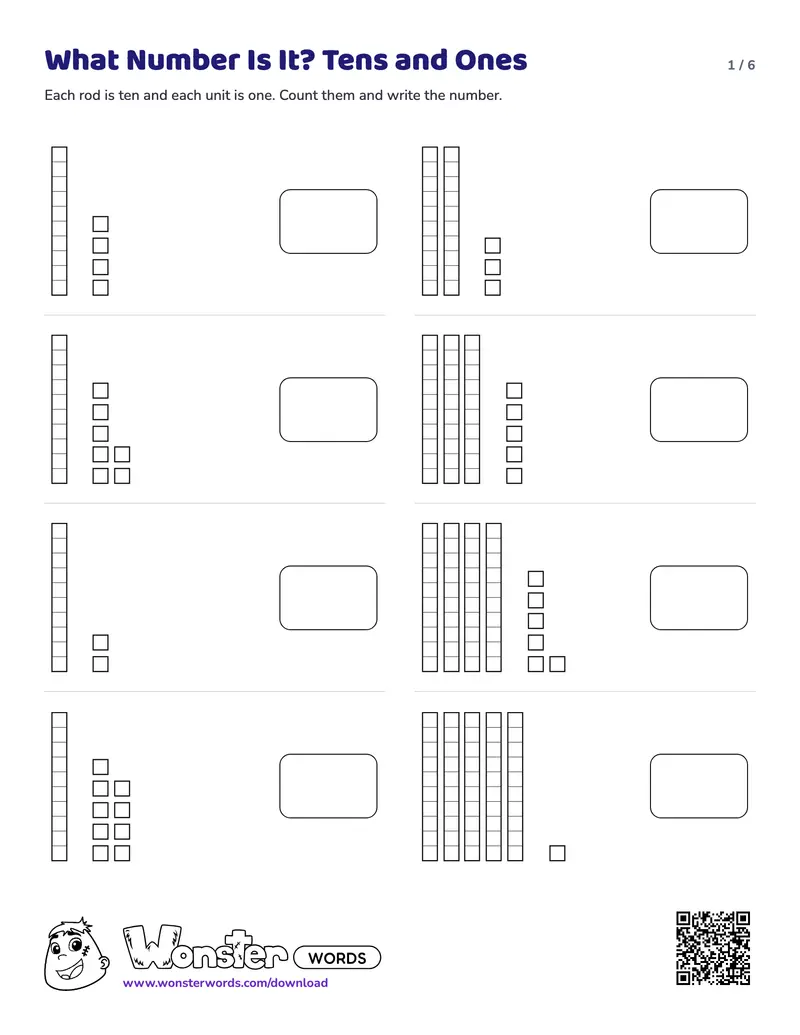
- Base Ten Blocks: Regrouping (PDF)24 numbers to write · answer key included · 6 pages
Preview page 1Preview
- Addition with Regrouping (PDF)108 problems · answer key included · 14 pages
Preview page 1Preview
- Subtraction with Regrouping (PDF)102 problems · answer key included · 14 pages
Preview page 1Preview
- Tape Diagram Word Problems (PDF)15 problems · answer key included · 8 pages
Preview page 1Preview
3. Place value to 1,000, skip counting, and even and odd
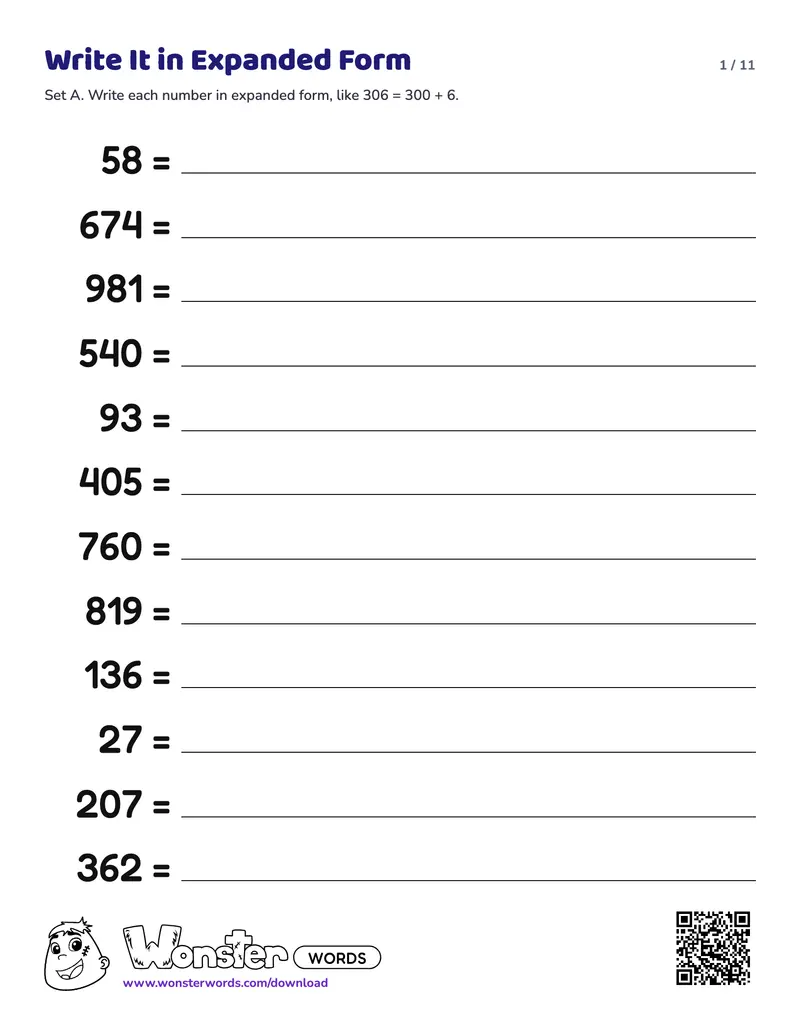
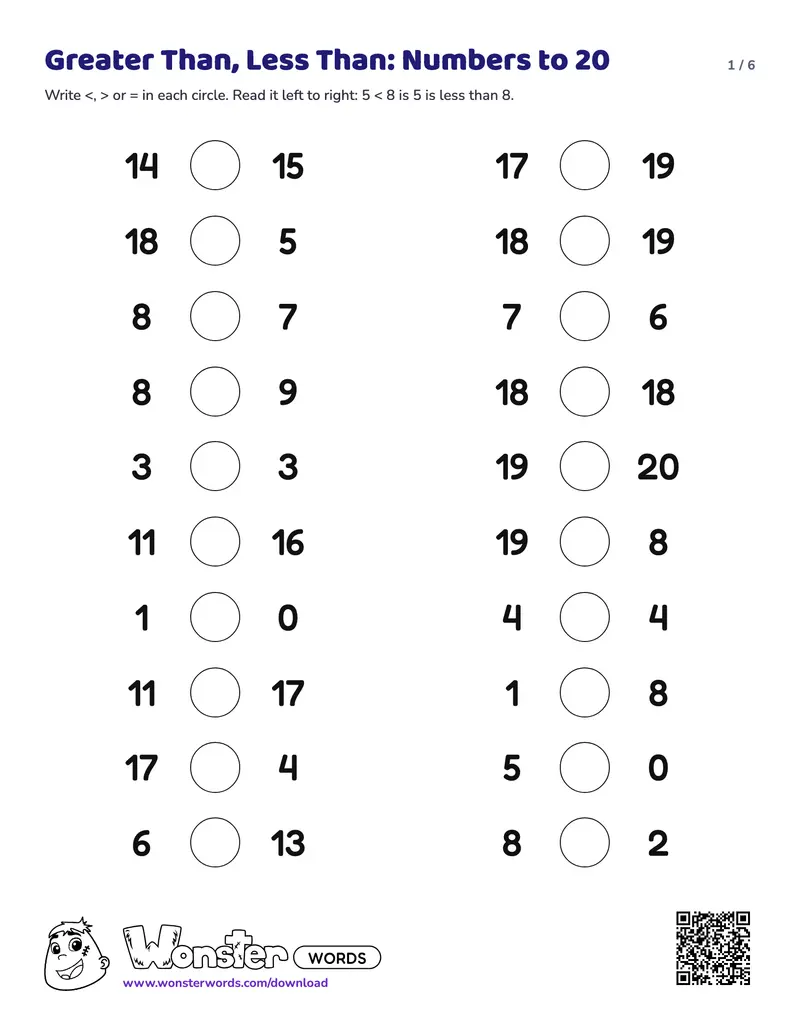
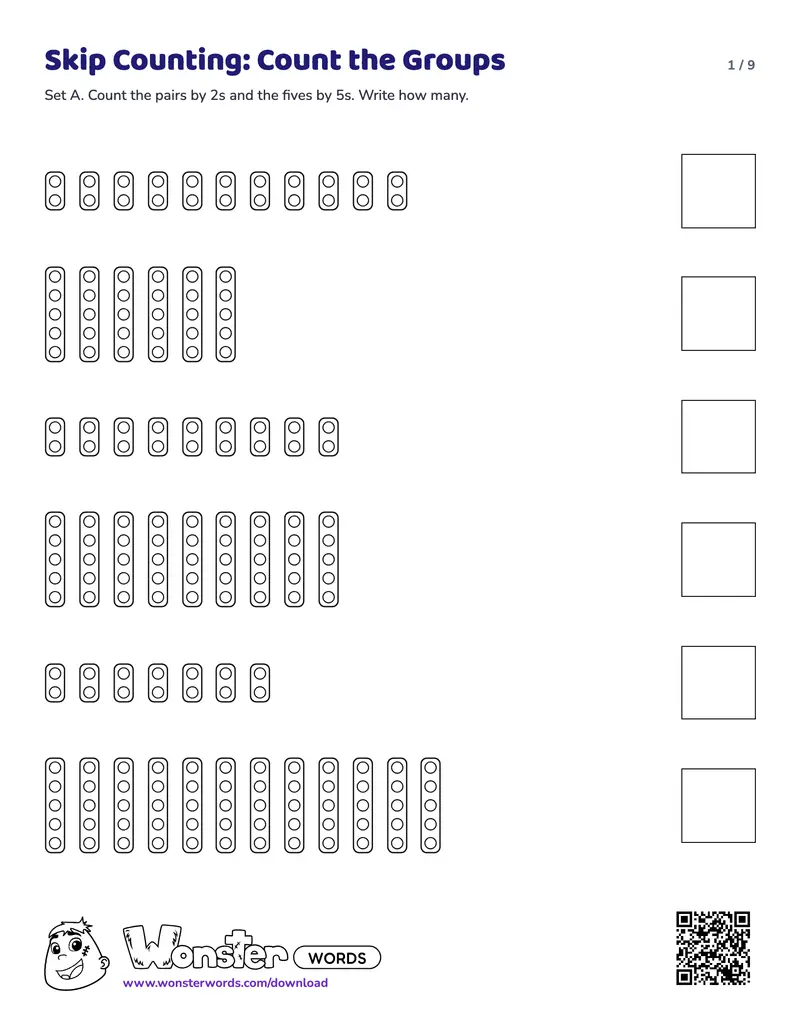
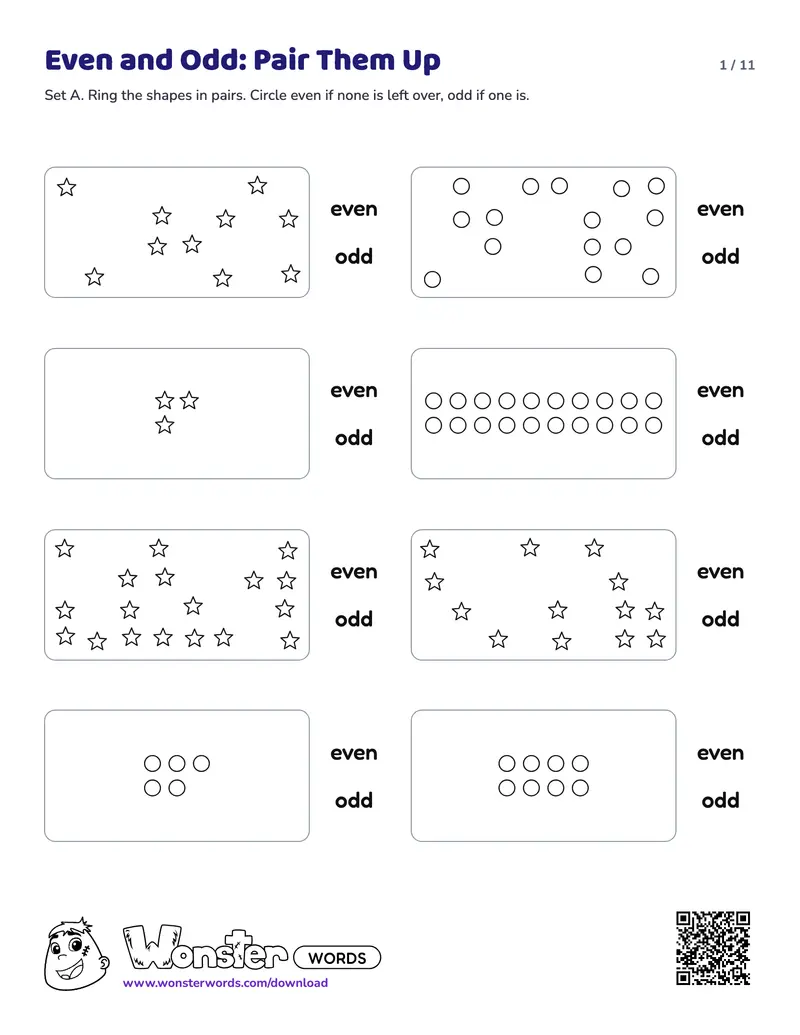
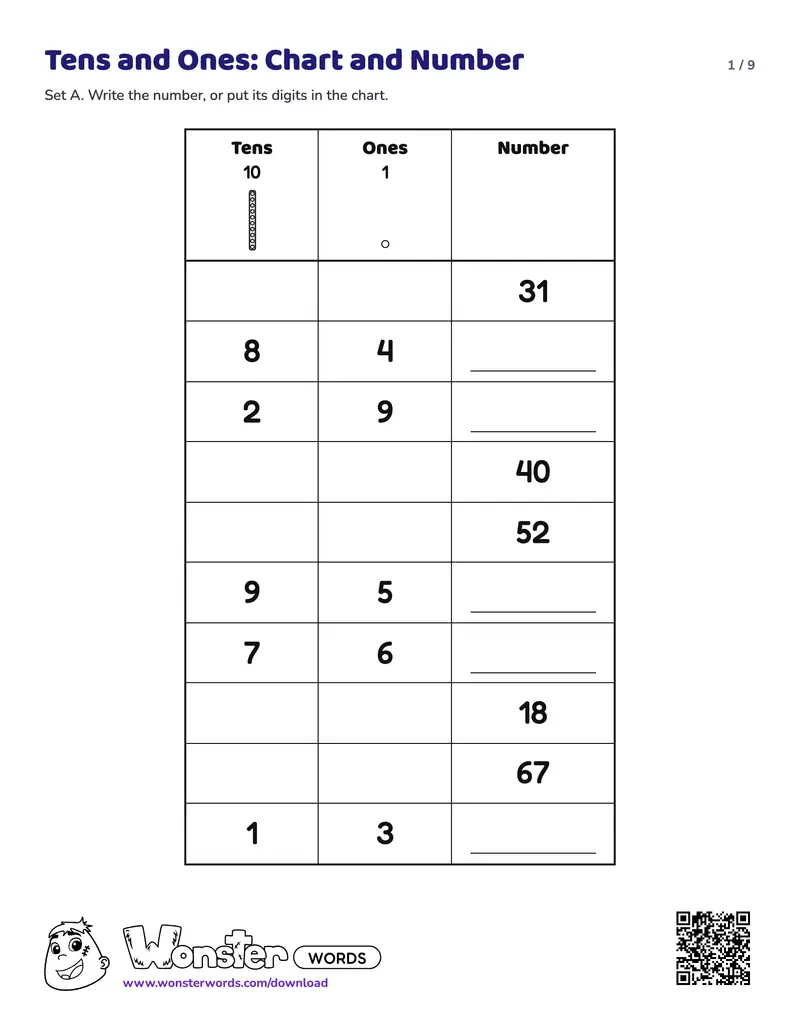
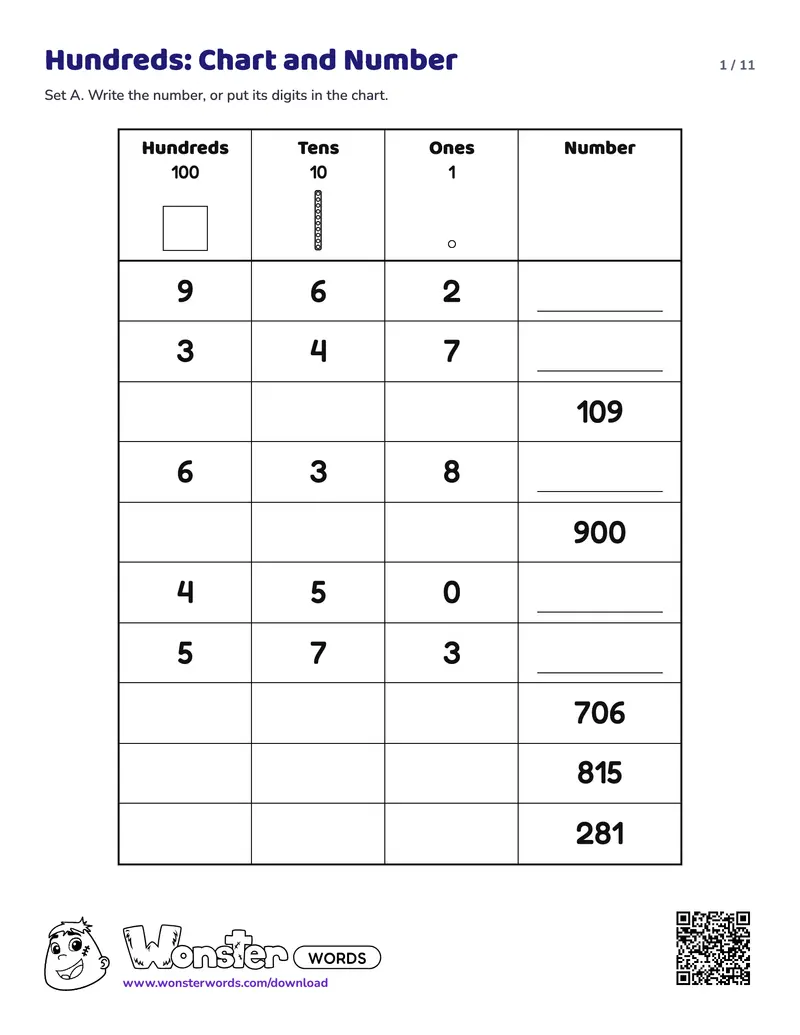
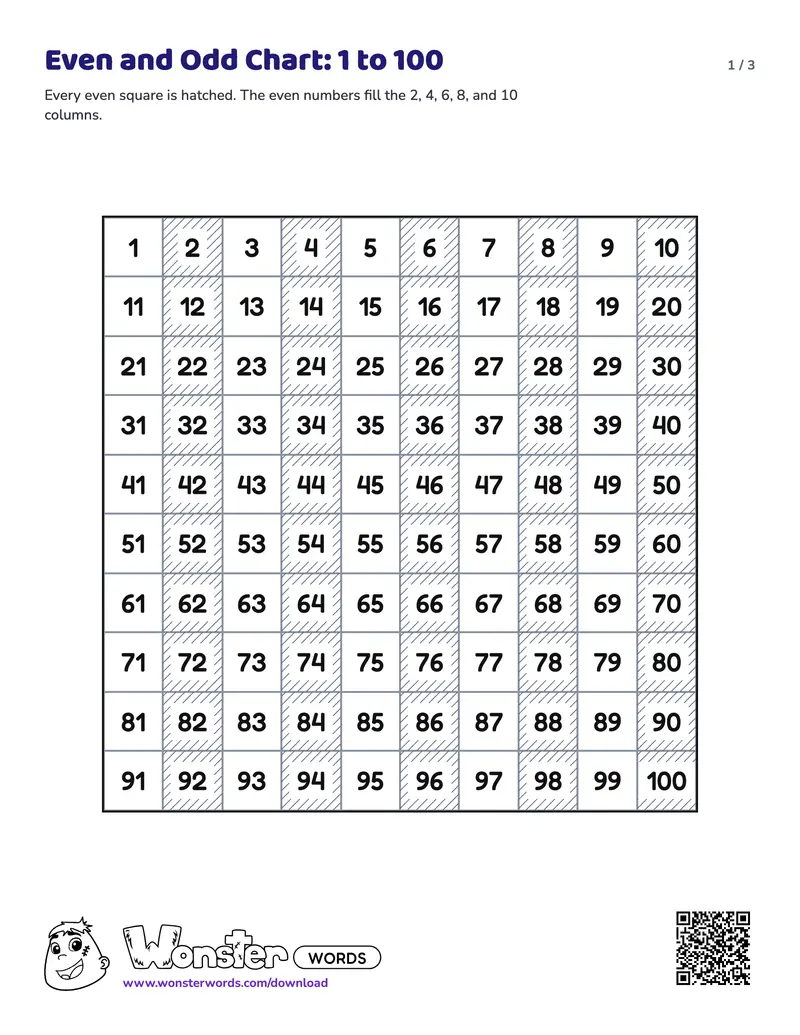
Tens and ones come first as a review, then hundreds, tens, and ones on the place value chart sheets and the base ten blocks, then expanded form. Greater Than, Less Than stops at two-digit numbers; comparing three-digit numbers is taught on the place value page. The skip counting sheet covers 5s, 10s, and 100s (2.NBT.A.2), and even and odd numbers is 2.OA.C.3.
Free PDF · no sign-up
Feedback?Free printable second grade place value, skip counting, and even and odd worksheets
Hundreds, tens, and ones, expanded form, comparing, counting by 5s, 10s, and 100s, and odd and even. Each PDF is free, prints in black and white, and ends with its answer key and a page for grown-ups.
- Expanded Form Worksheets (PDF)96 numbers · answer key included · 11 pages
Preview page 1Preview
- Greater Than, Less Than (PDF)72 comparisons · answer key included · 7 pages
Preview page 1Preview
- Skip Counting (PDF)68 numbers to write · answer key included · 9 pages
Preview page 1Preview
- Even and Odd Numbers (PDF)96 even or odd questions · answer key included · 11 pages
Preview page 1Preview
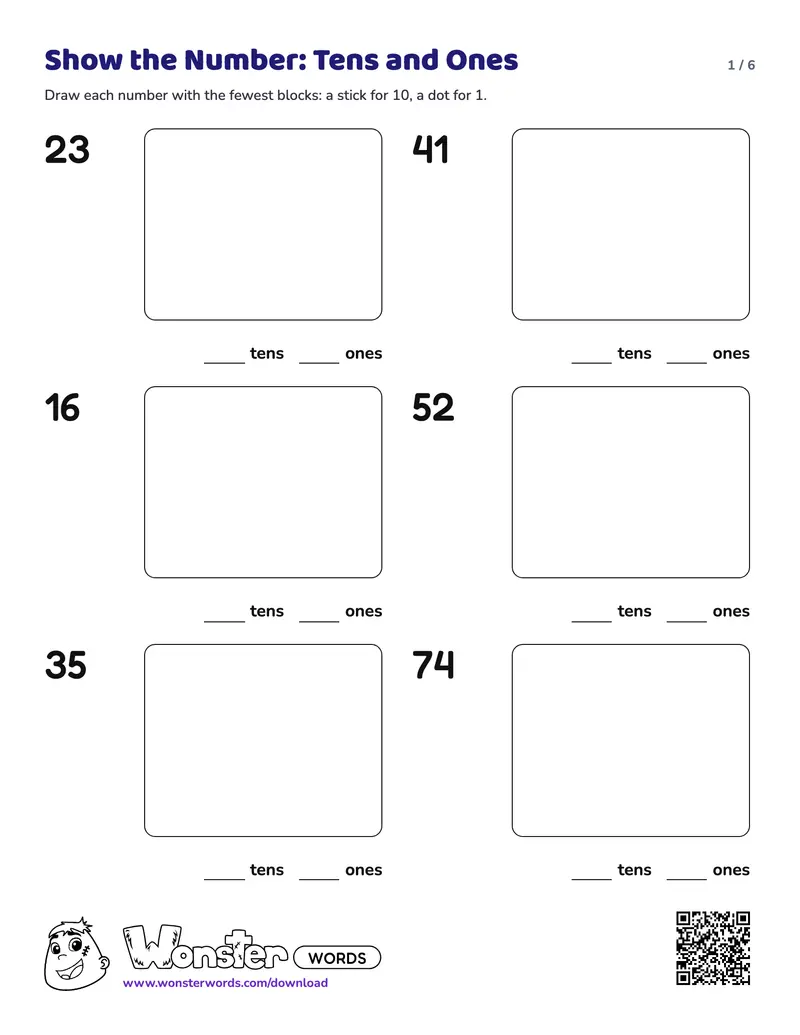
4. Equal groups and arrays
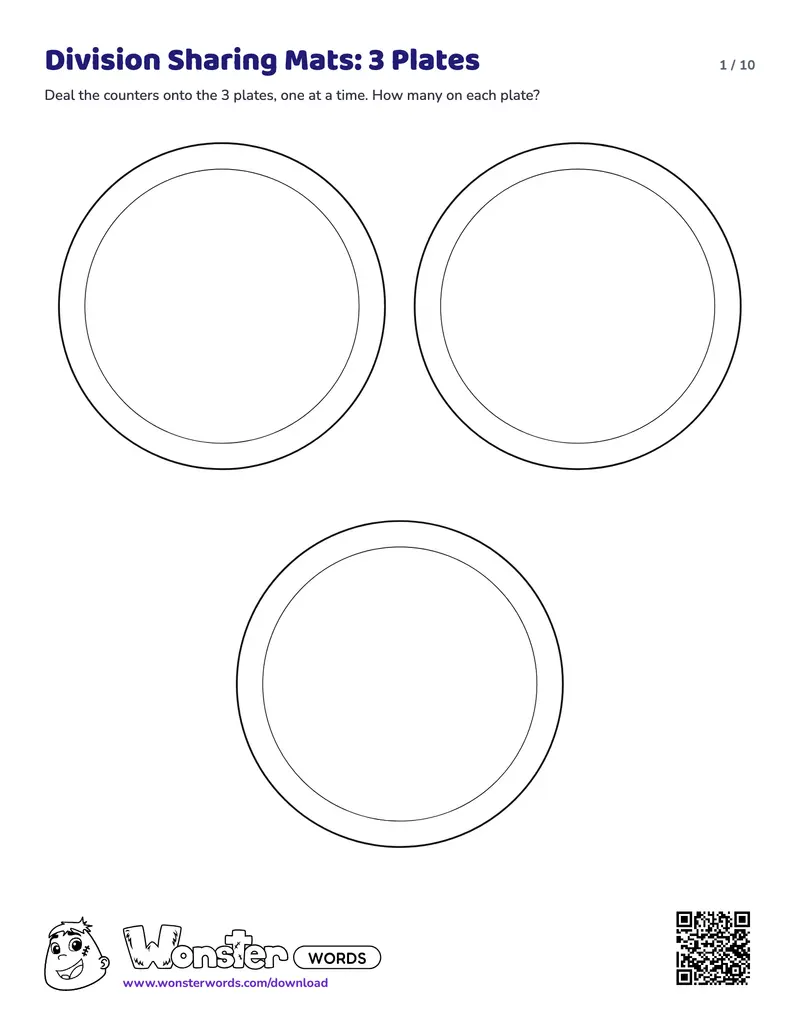
Second grade adds up equal groups and the rows of an array, up to 5 rows and 5 columns (2.OA.C.4). On Equal Groups, from the multiplication worksheets, the first two pages are second grade; the later pages write the × sign, which is third grade. Division Sharing Mats, from the division page, is Texas second grade (2.6(B)) and Common Core third grade.
Free PDF · no sign-up
Feedback?Free printable second grade equal groups and array worksheets
Arrays added row by row, equal groups, and sharing mats. Each PDF is free, prints in black and white, and ends with its answer key and a page for grown-ups.
- Arrays: Add the Rows (PDF)24 arrays · answer key included · 6 pages
Preview page 1Preview
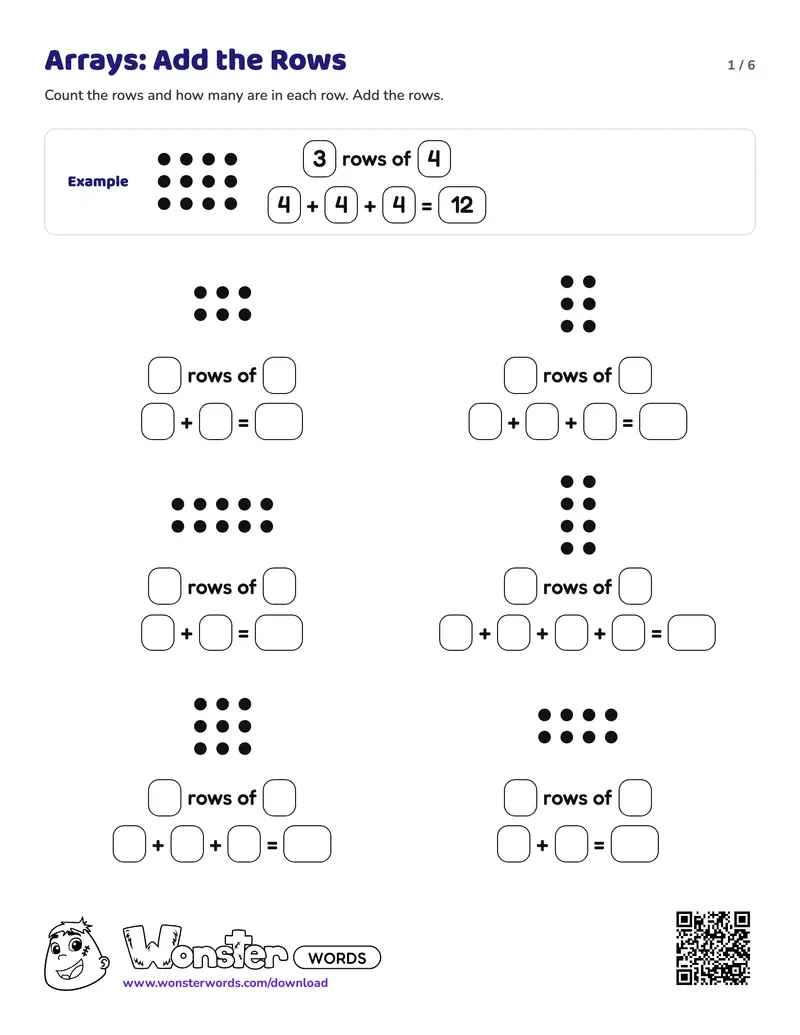
- Draw the Array (PDF)24 arrays · answer key included · 6 pages
Preview page 1Preview
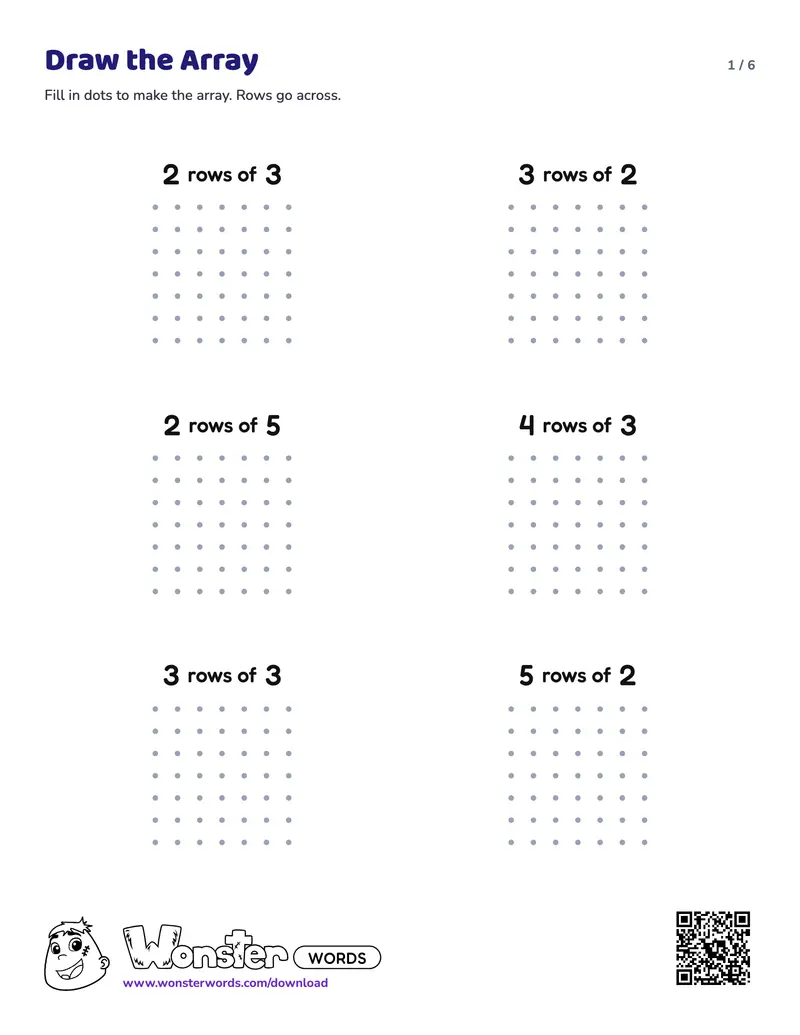
- Equal Groups (PDF)36 problems · answer key included · 9 pages
Preview page 1Preview
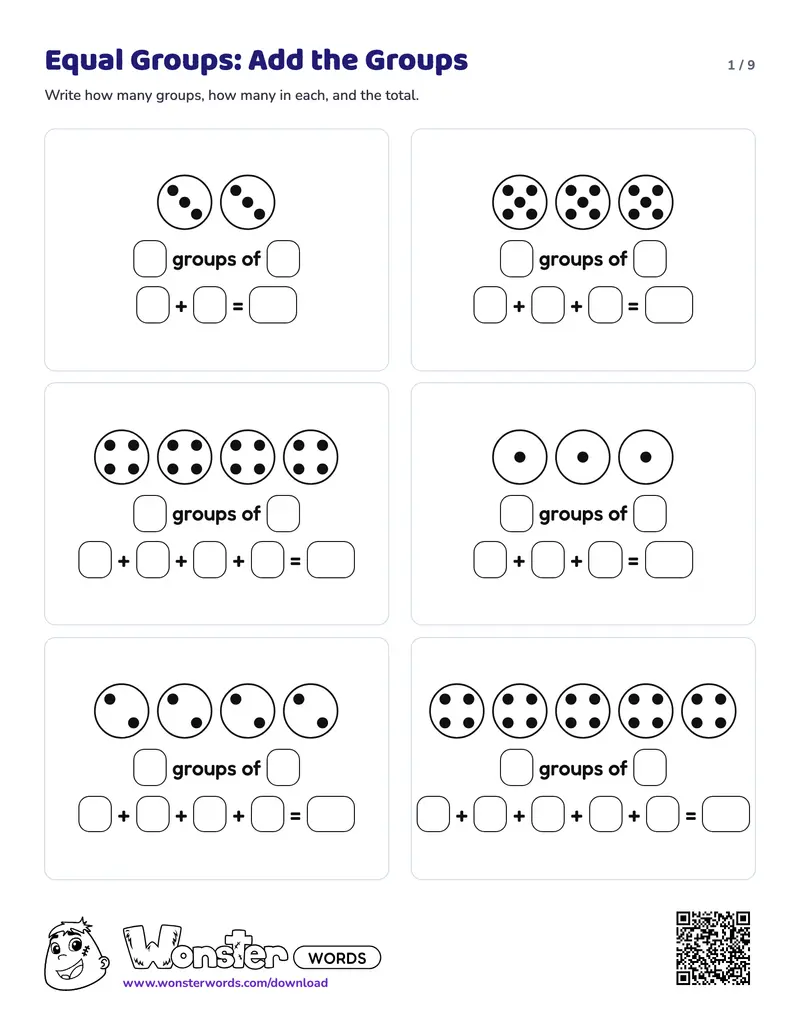
- Division Sharing Mats (PDF)4 mats · answer key included · 10 pages
Preview page 1Preview
5. Shapes and equal parts
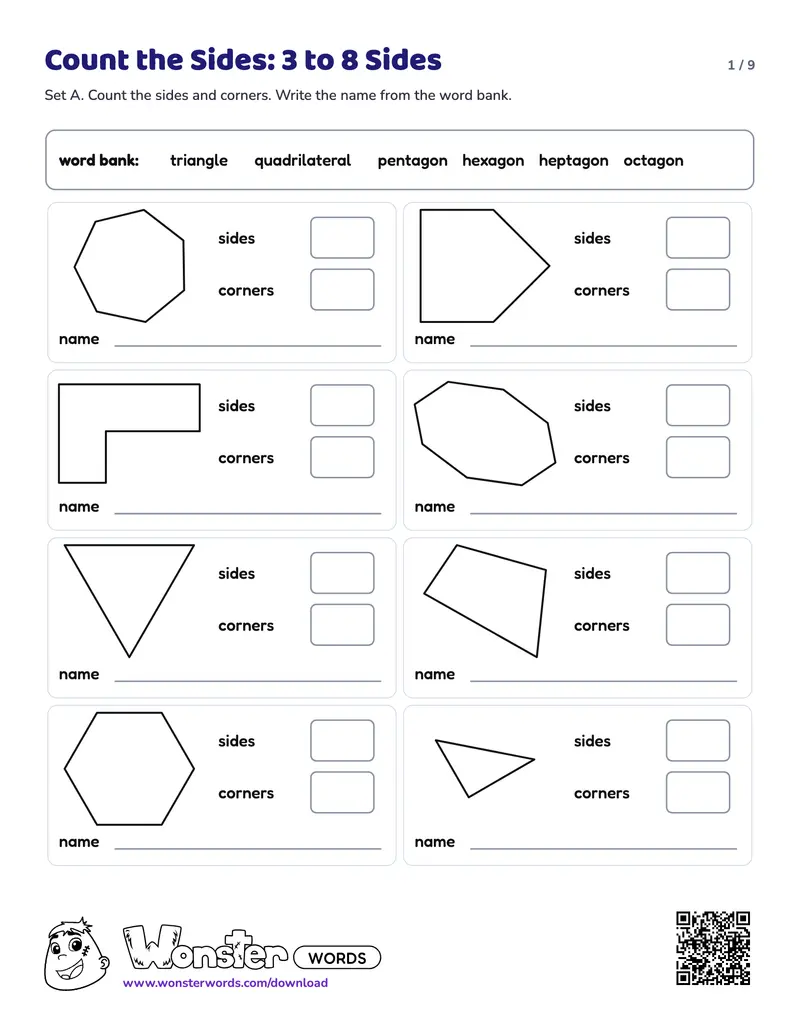
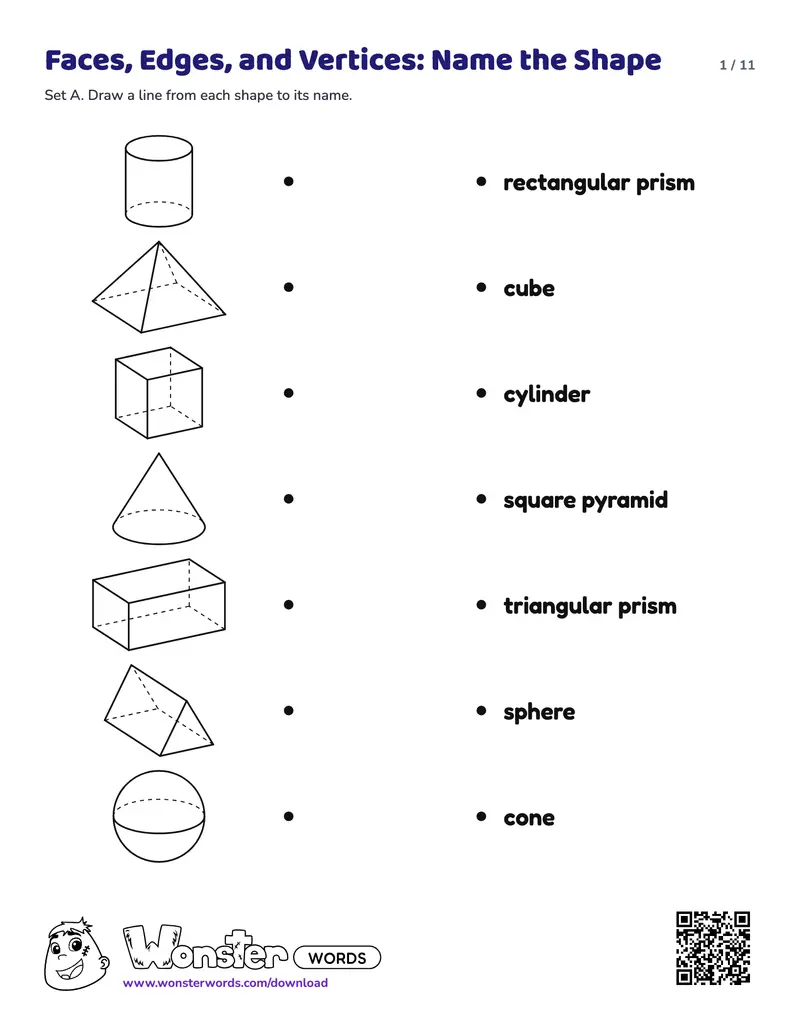
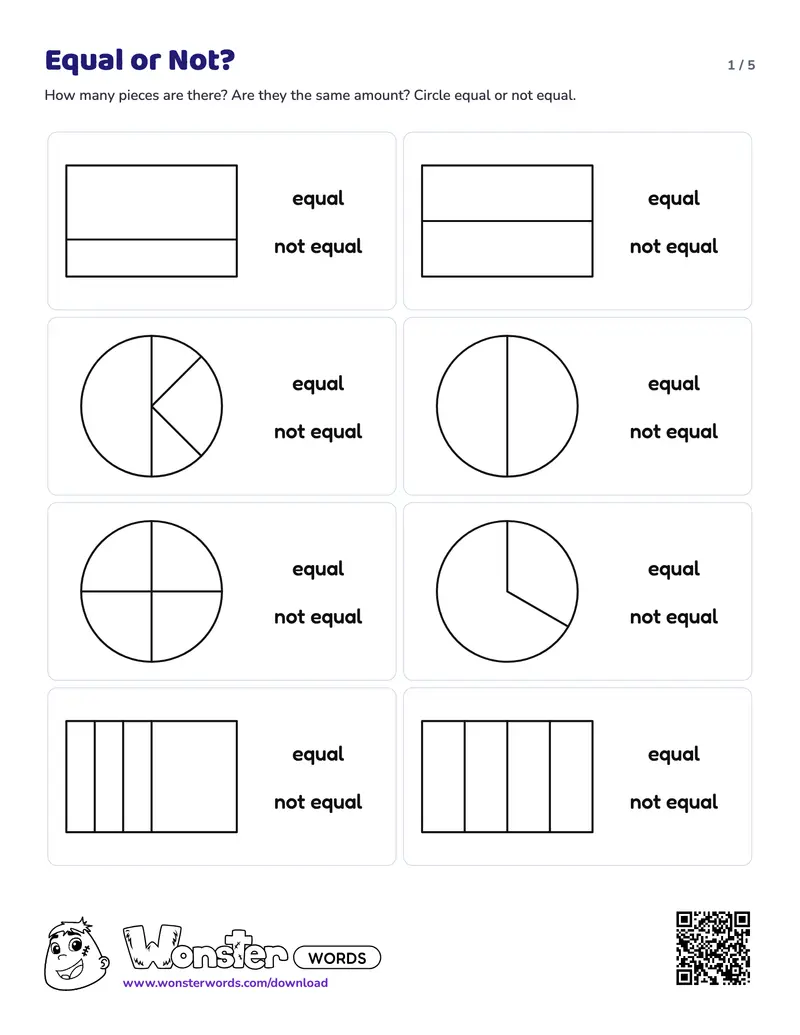
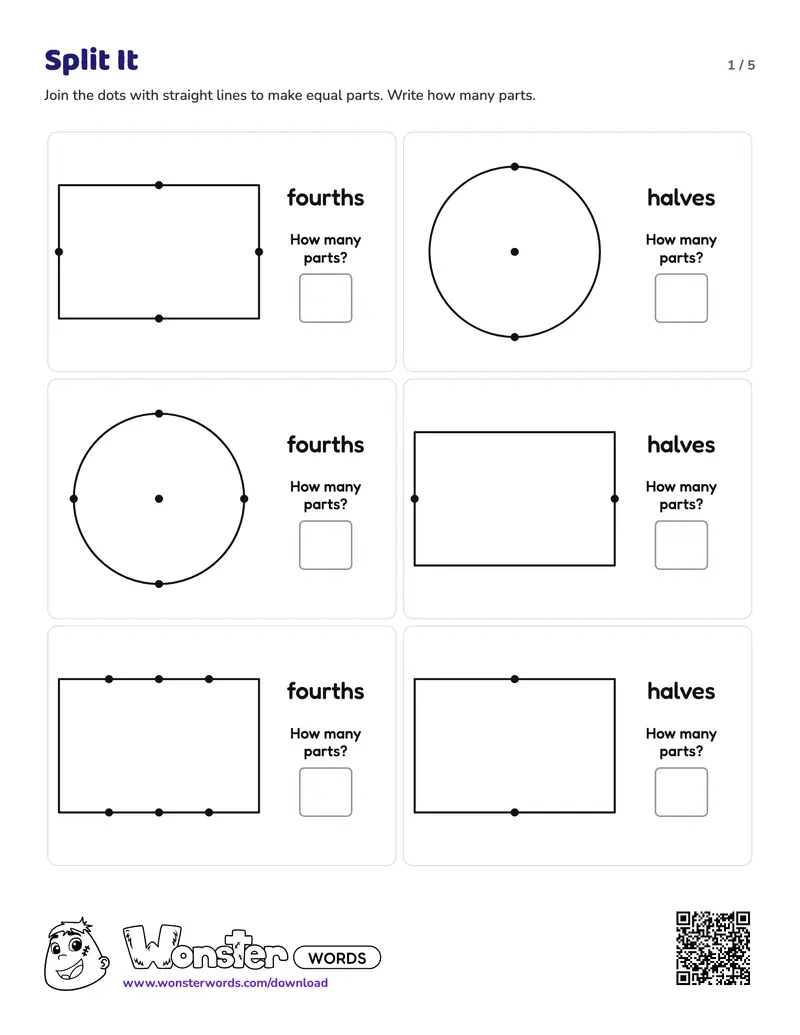
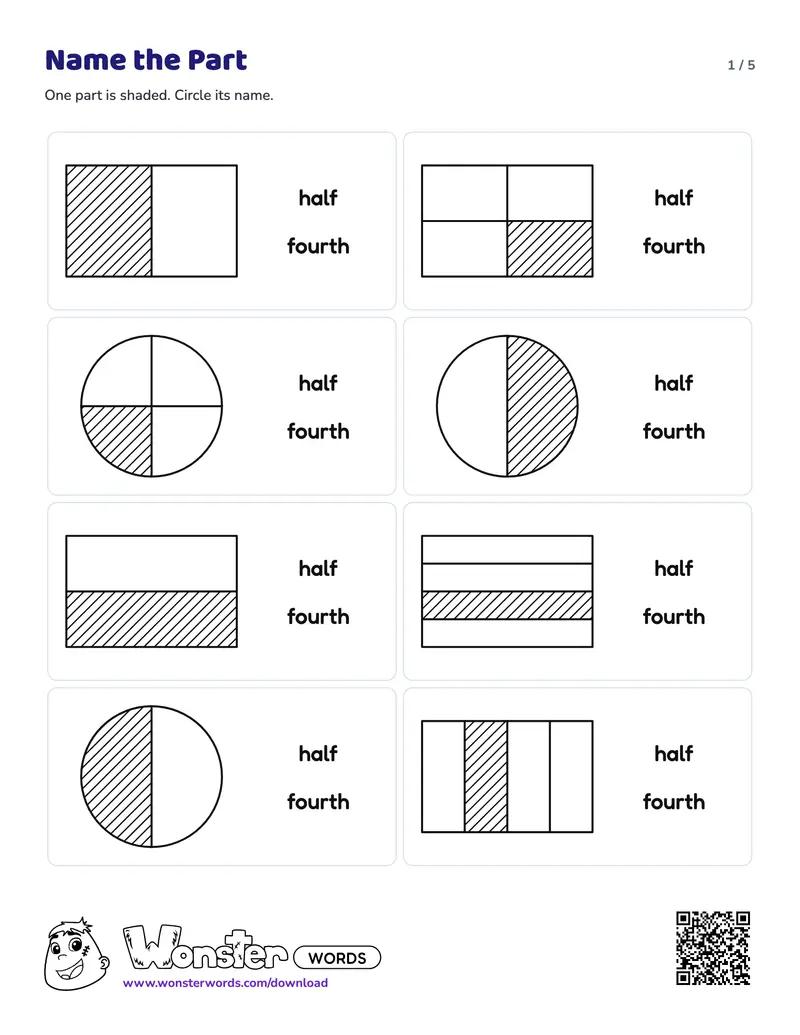
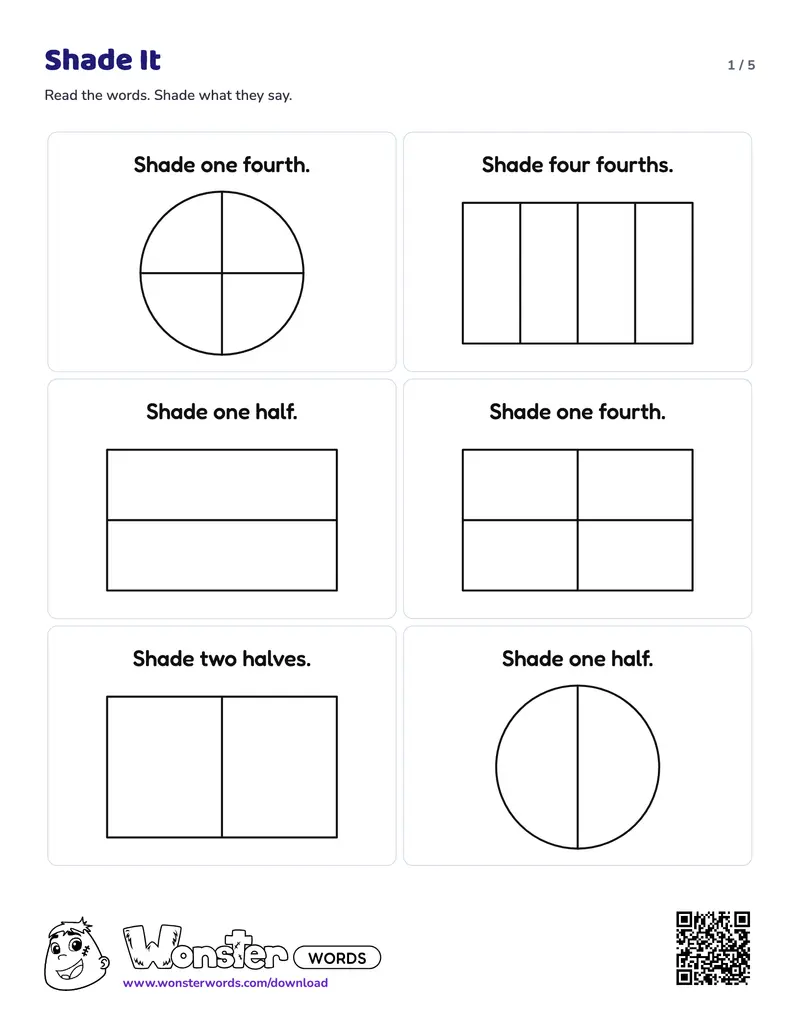
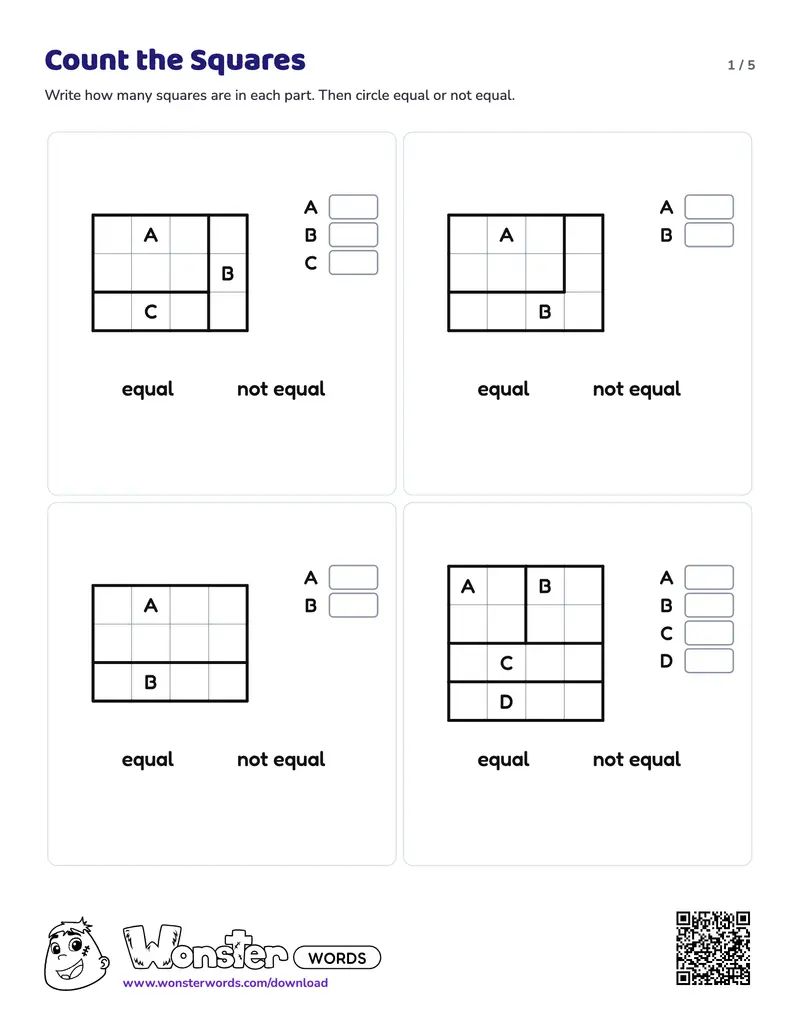
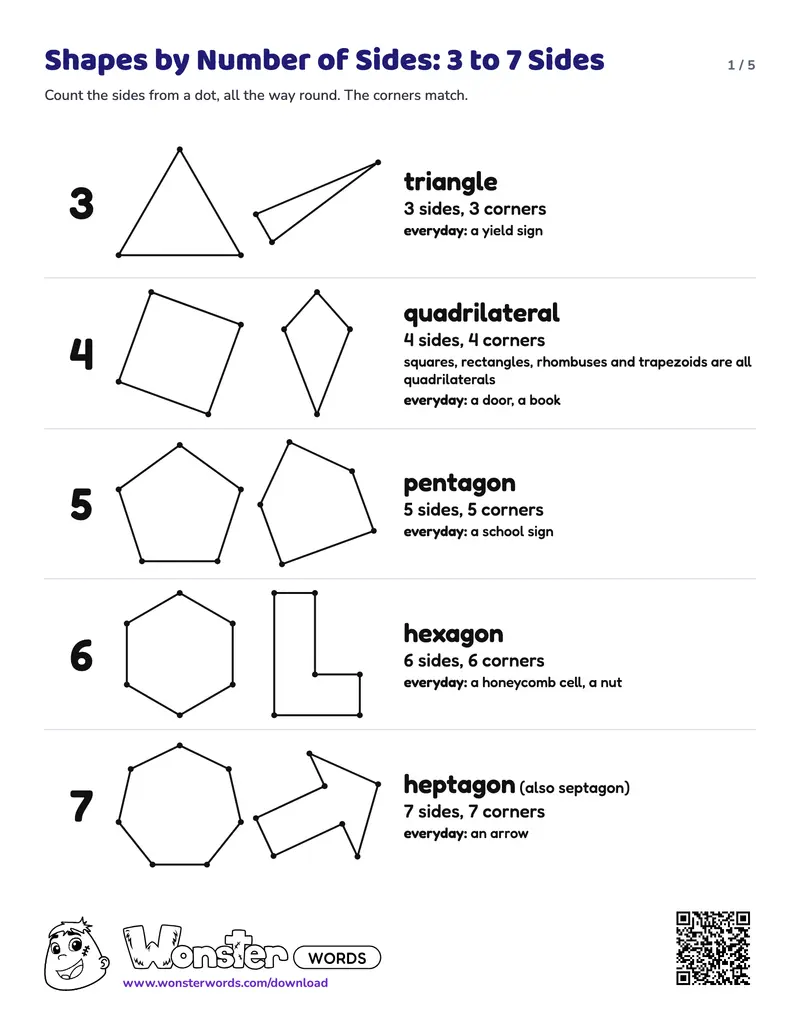
Count the Sides names triangles, quadrilaterals, pentagons, and hexagons by their sides (2.G.A.1), and Faces, Edges, and Vertices, from the 3D shapes page, covers the cube. Halves, thirds, and fourths of a shape (2.G.A.3) are taught on the equal parts page. Its first four sheets run in stages: page 2 adds thirds, for second grade under the Common Core, and page 3 is eighths, for second grade in Texas.
Free PDF · no sign-up
Feedback?Free printable second grade shape worksheets
Flat shapes by their sides, solid shapes by their faces, edges, and vertices, and equal parts. Each PDF is free, prints in black and white, and ends with its answer key and a page for grown-ups.
- Count the Sides (PDF)24 shapes · answer key included · 9 pages
Preview page 1Preview
- Faces, Edges, and Vertices (PDF)24 shapes · answer key included · 11 pages
Preview page 1Preview
- Equal or Not? (PDF)24 shapes · answer key included · 5 pages
Preview page 1Preview
- Split It (PDF)18 shapes · answer key included · 5 pages
Preview page 1Preview
- Name the Part (PDF)24 shapes · answer key included · 5 pages
Preview page 1Preview
- Shade It (PDF)18 shapes · answer key included · 5 pages
Preview page 1Preview
- Count the Squares (PDF)12 rectangles · answer key included · 5 pages
Preview page 1Preview
6. Charts, mats, and cards
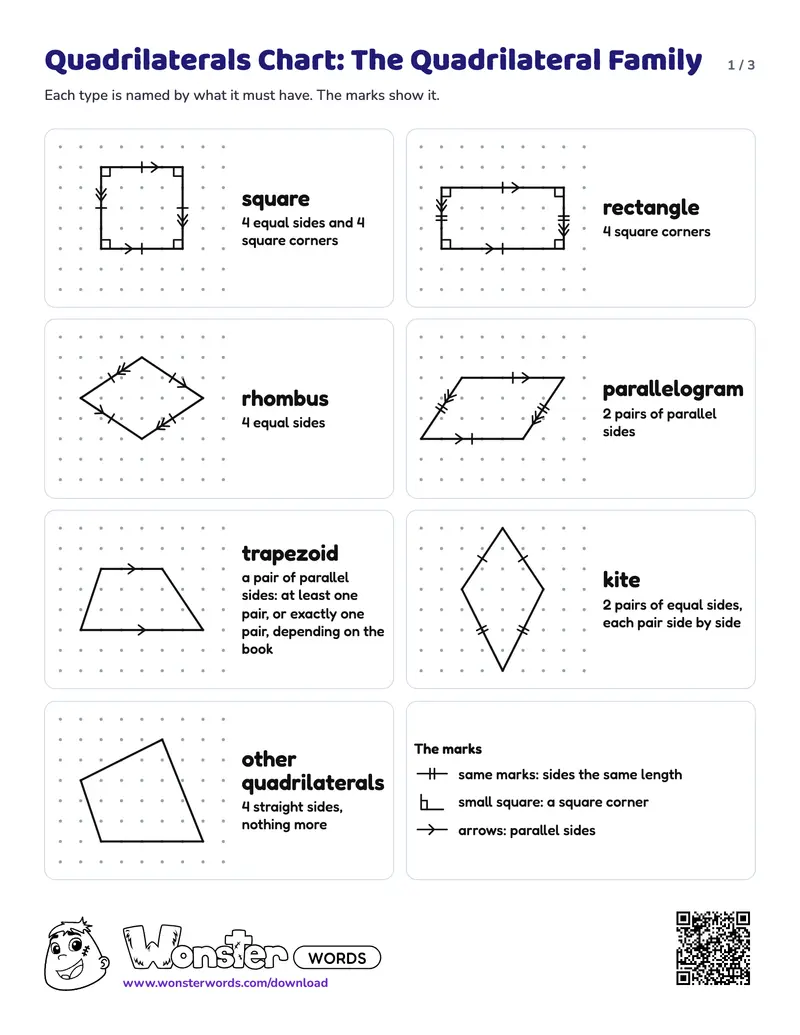
These sit beside a worksheet: a hundreds chart, number lines, the addition chart, flash cards, place value charts and mats, and the reference charts for skip counting, odd and even, shapes, and quadrilaterals.
Free PDF · no sign-up
Feedback?Free printable second grade math charts, mats, and cards
Charts, mats, and cut-out sets have no answer key because there is nothing to answer; the two flash card decks end with an answer key. Each PDF is free and prints in black and white.
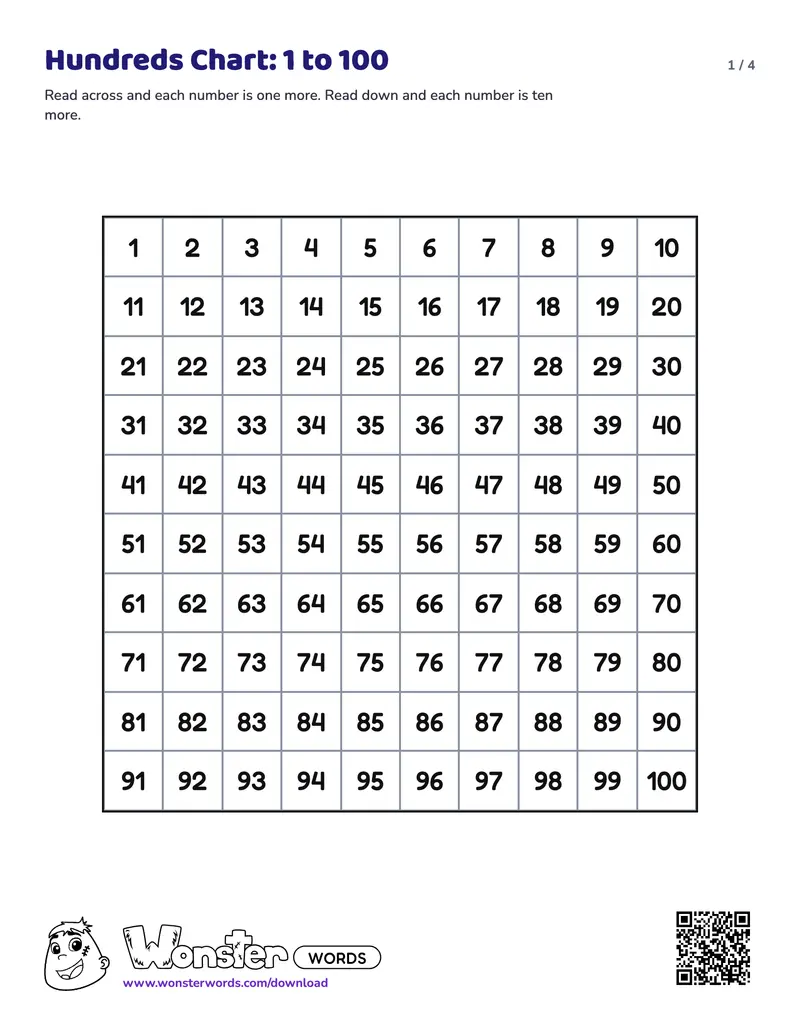
- Hundreds Chart (PDF)120 numbers · 5 pages
Preview page 1Preview
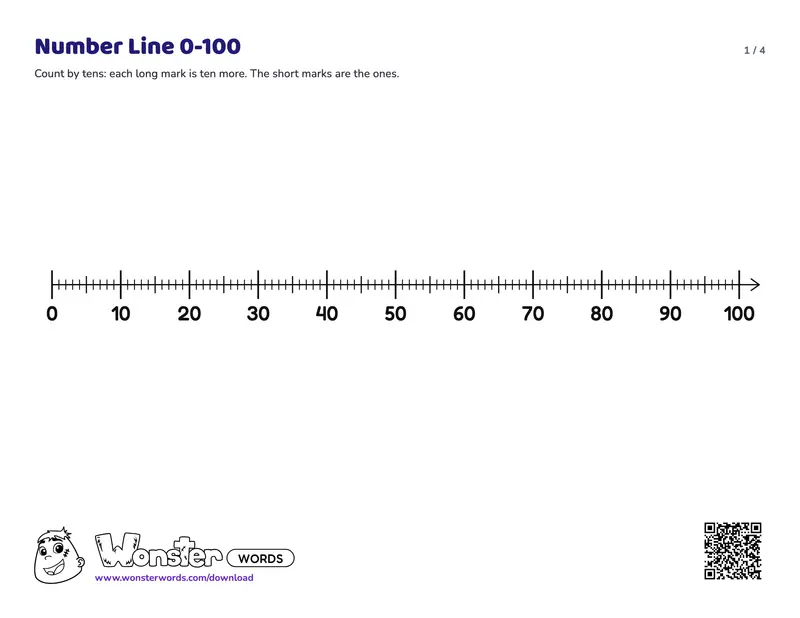
- Number Line 0-100 (PDF)101 numbers · 4 pages
Preview page 1Preview
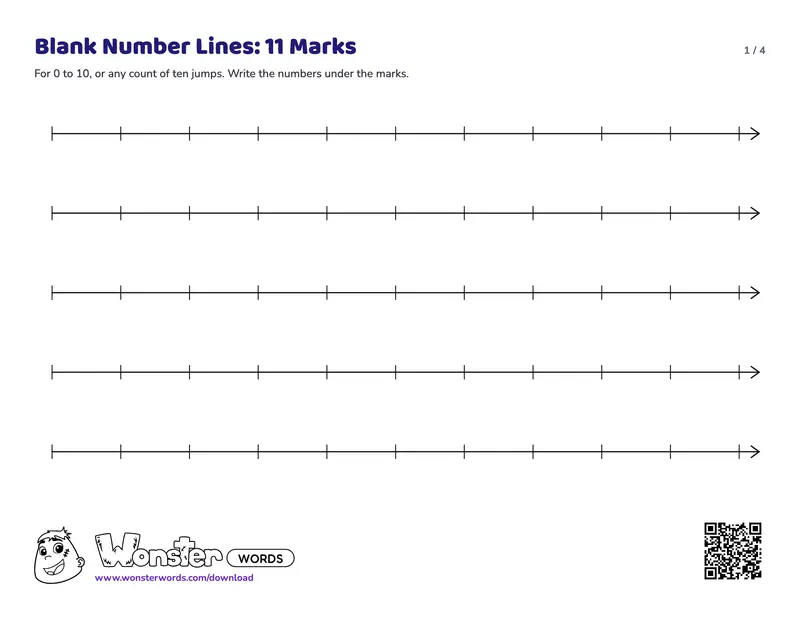
- Blank Number Lines (PDF)15 number lines · 4 pages
Preview page 1Preview
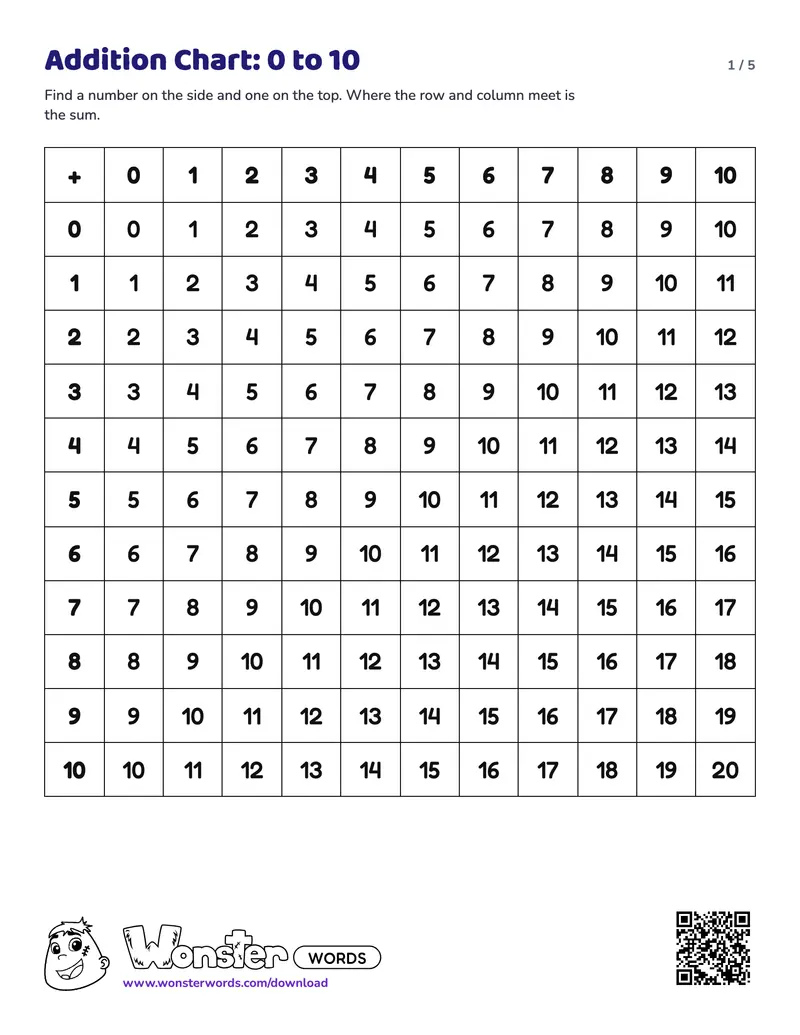
- Addition Chart (PDF)477 facts · 5 pages
Preview page 1Preview
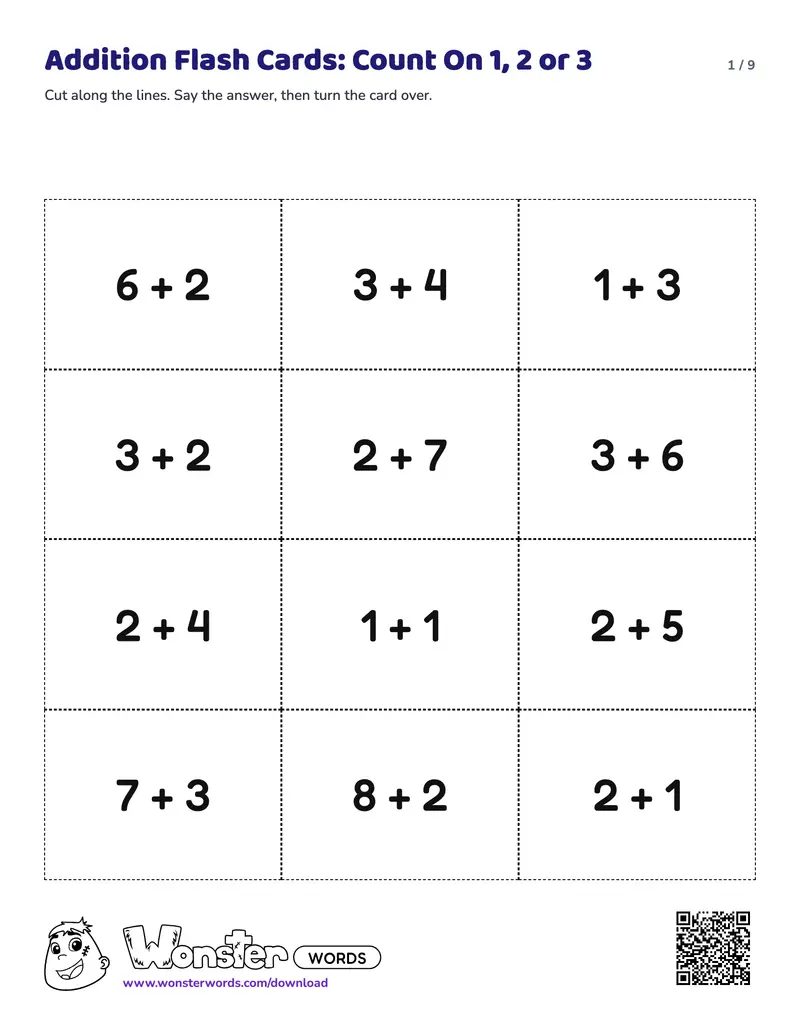
- Addition Flash Cards (PDF)45 cards · answer key included · 9 pages
Preview page 1Preview
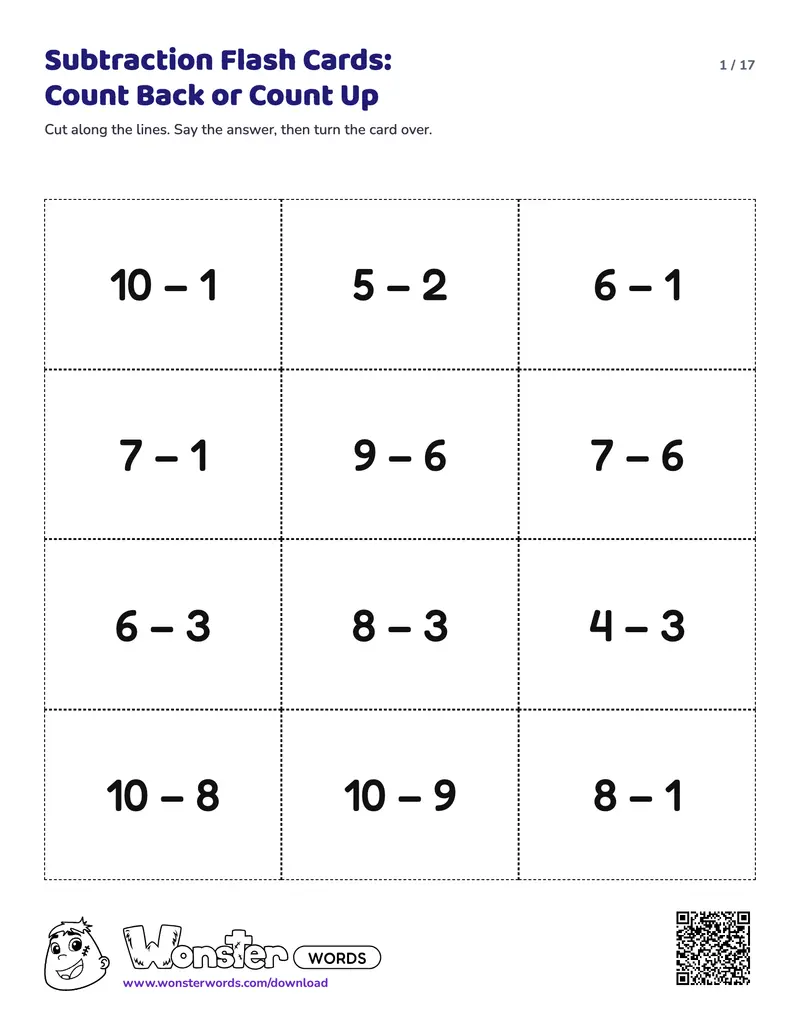
- Subtraction Flash Cards (PDF)81 cards · answer key included · 17 pages
Preview page 1Preview
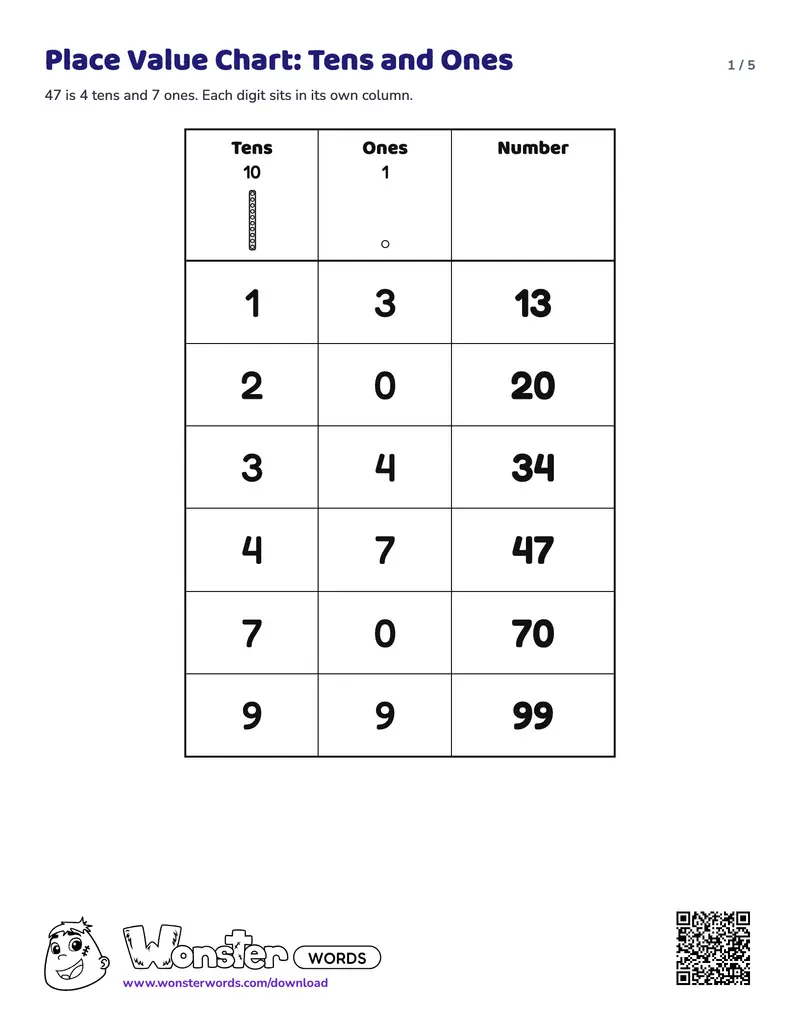
- Place Value Chart (PDF)17 numbers · 5 pages
Preview page 1Preview
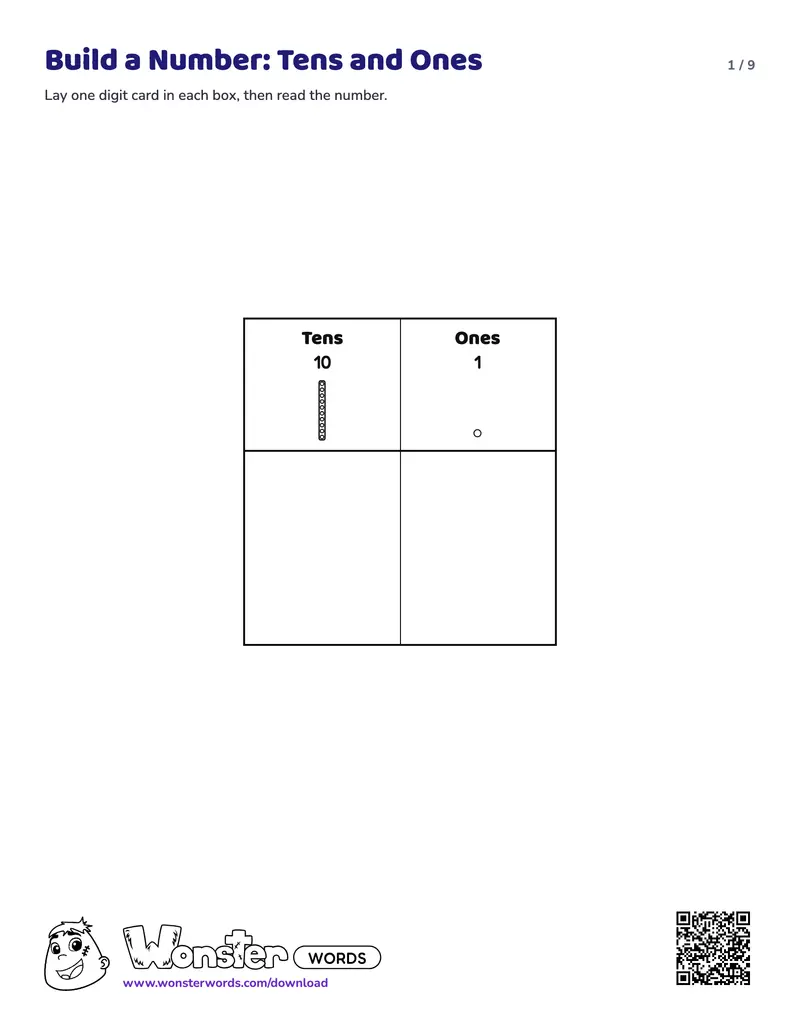
- Blank Place Value Chart (PDF)6 charts · 9 pages
Preview page 1Preview
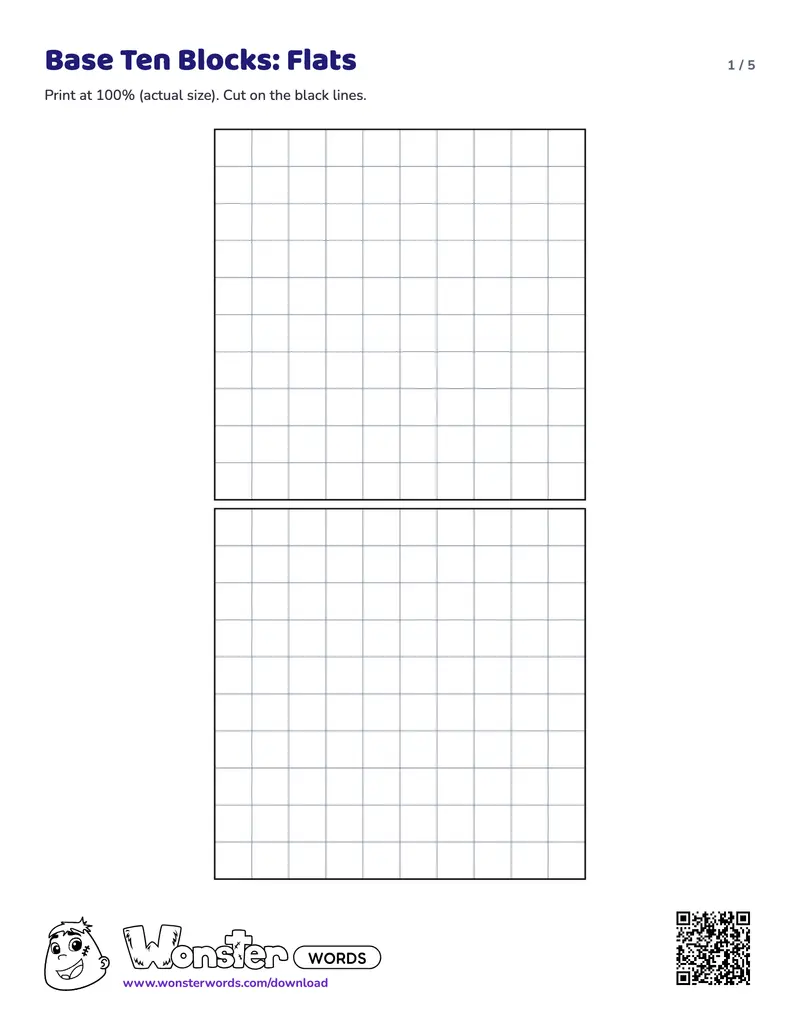
- Base Ten Blocks (PDF)370 pieces · 5 pages
Preview page 1Preview
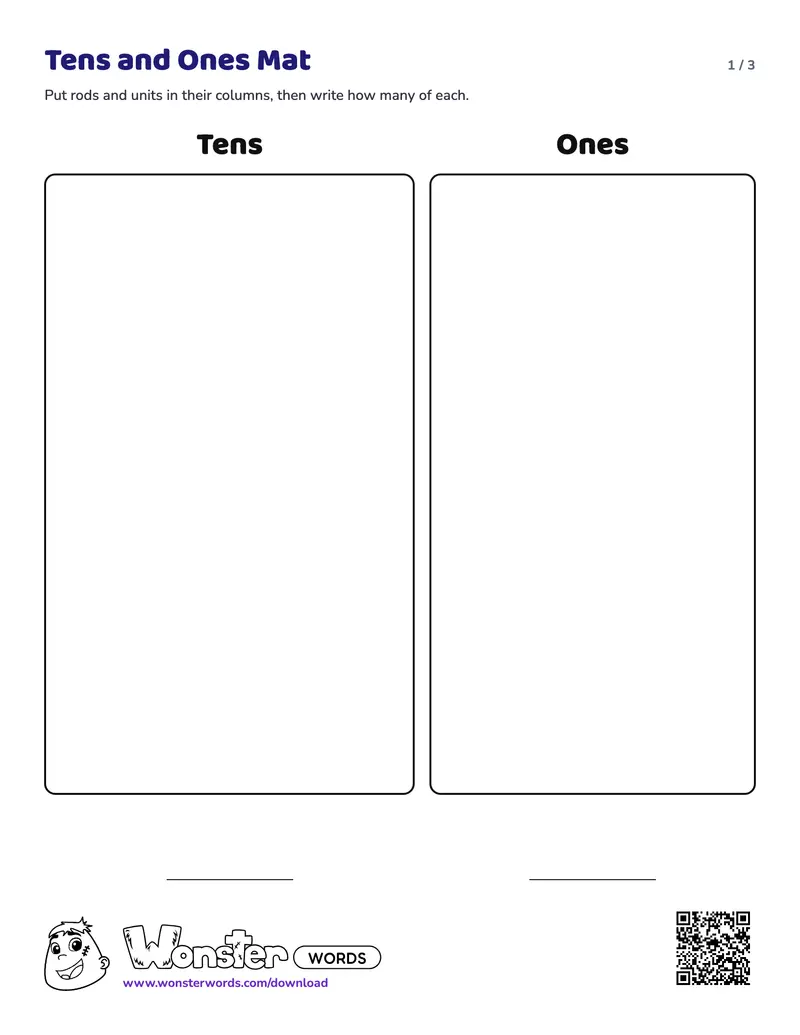
- Base Ten Mat (PDF)2 mats · 3 pages
Preview page 1Preview
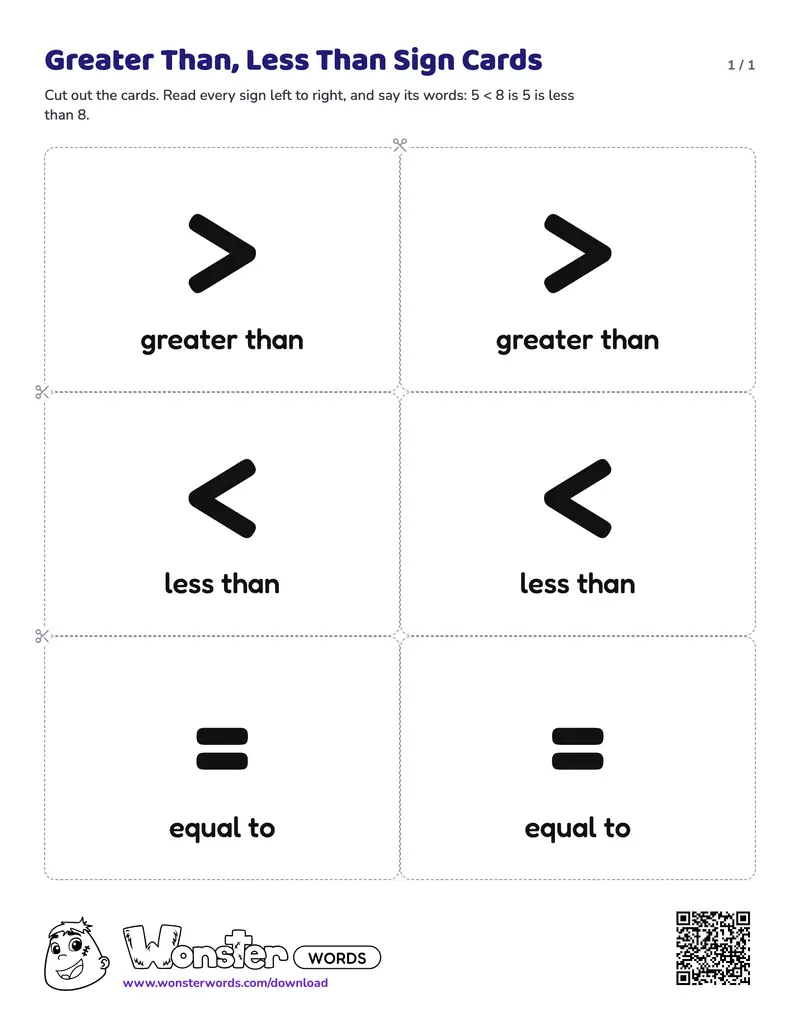
- Greater Than, Less Than Sign Cards (PDF)6 cards · 2 pages
Preview page 1Preview
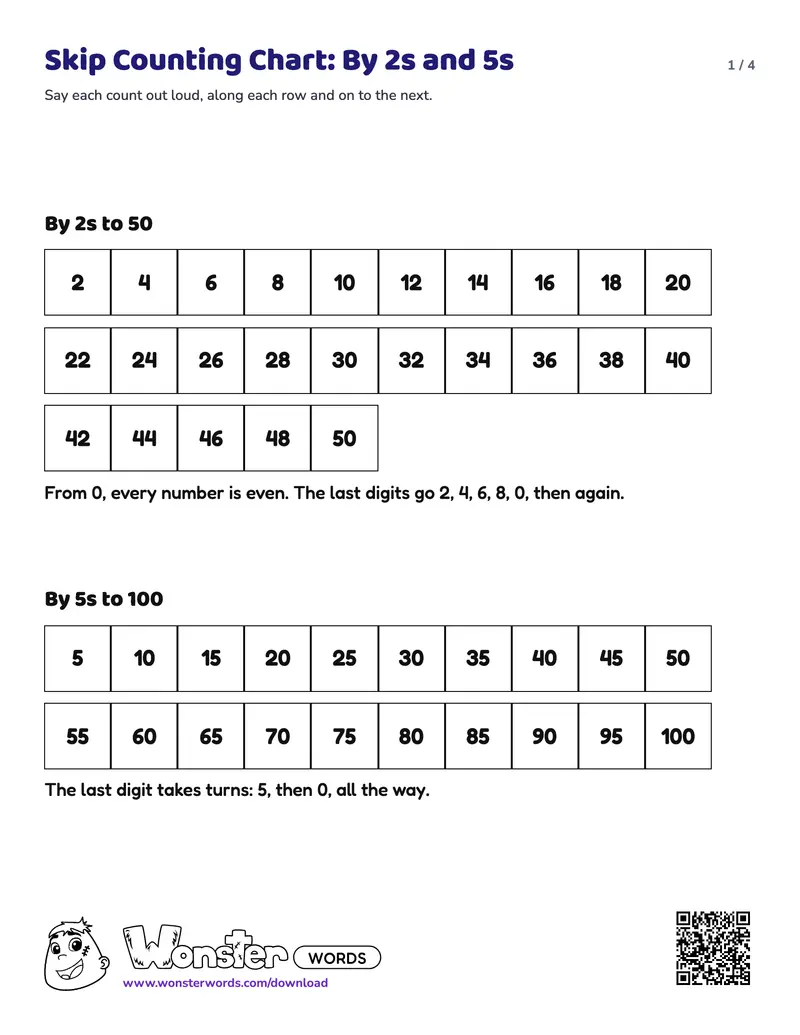
- Skip Counting Chart (PDF)135 numbers · 4 pages
Preview page 1Preview
- Even and Odd Chart (PDF)100 numbers · 3 pages
Preview page 1Preview
- Blank Tape Diagram (PDF)19 tape diagrams · 5 pages
Preview page 1Preview
- Shapes by Number of Sides (PDF)34 shapes · 5 pages
Preview page 1Preview
- Quadrilaterals Chart (PDF)7 shapes · 3 pages
Preview page 1Preview
7. Telling time and counting money
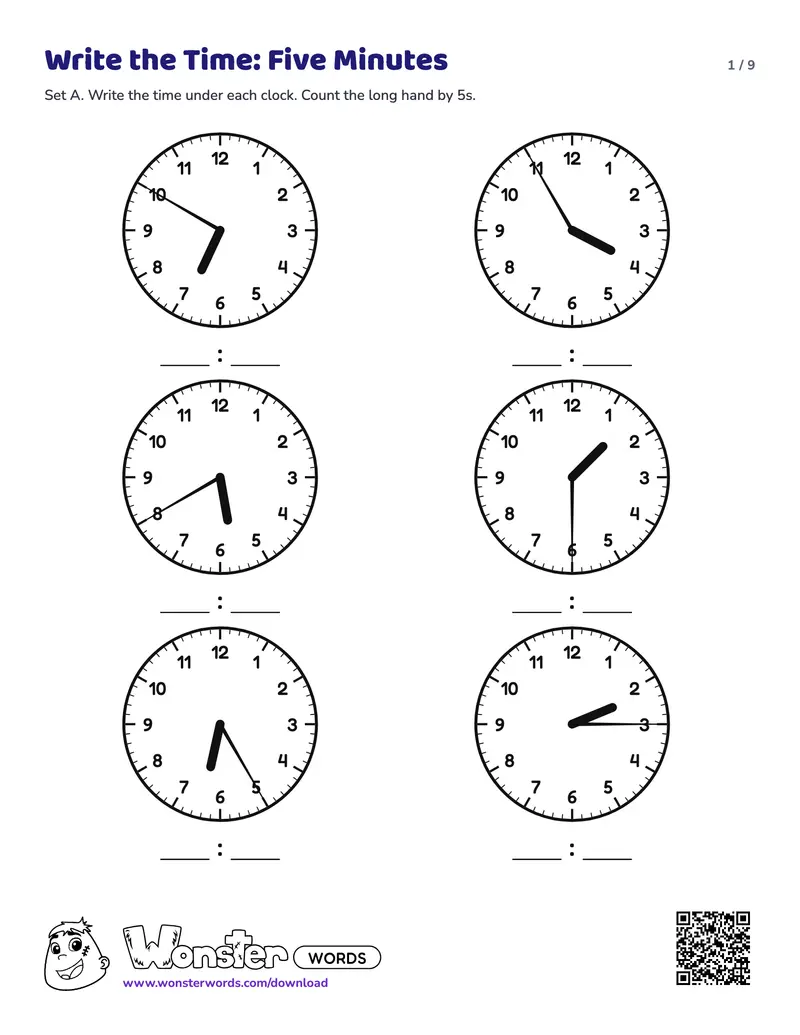
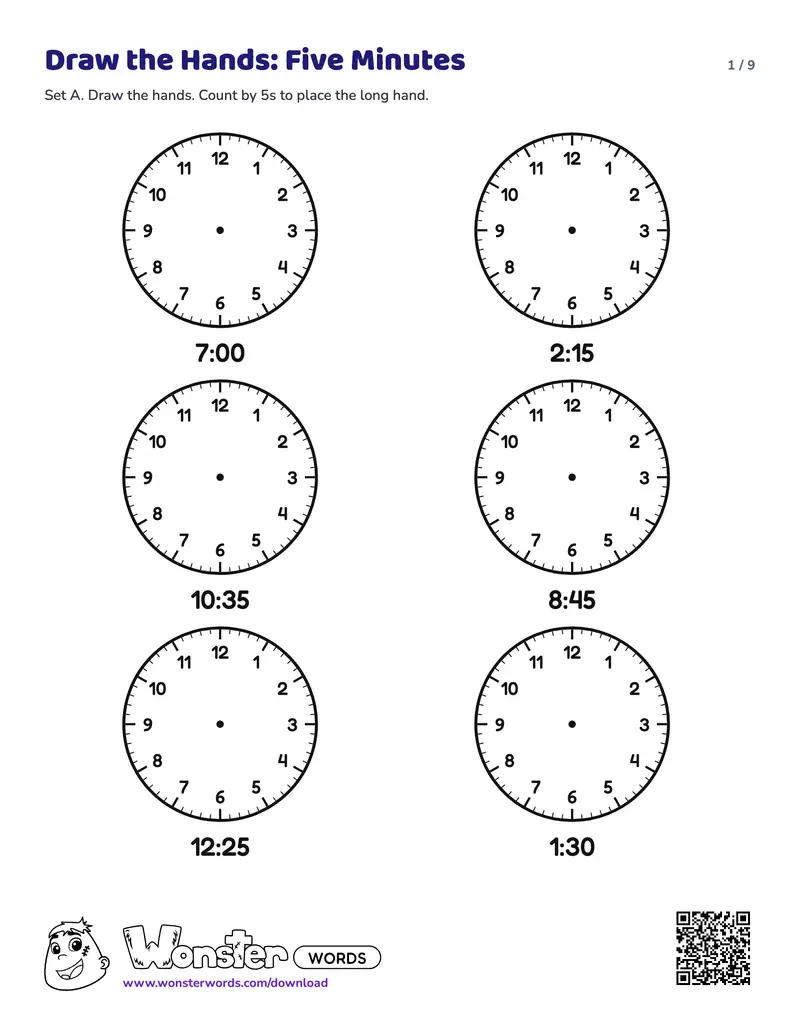
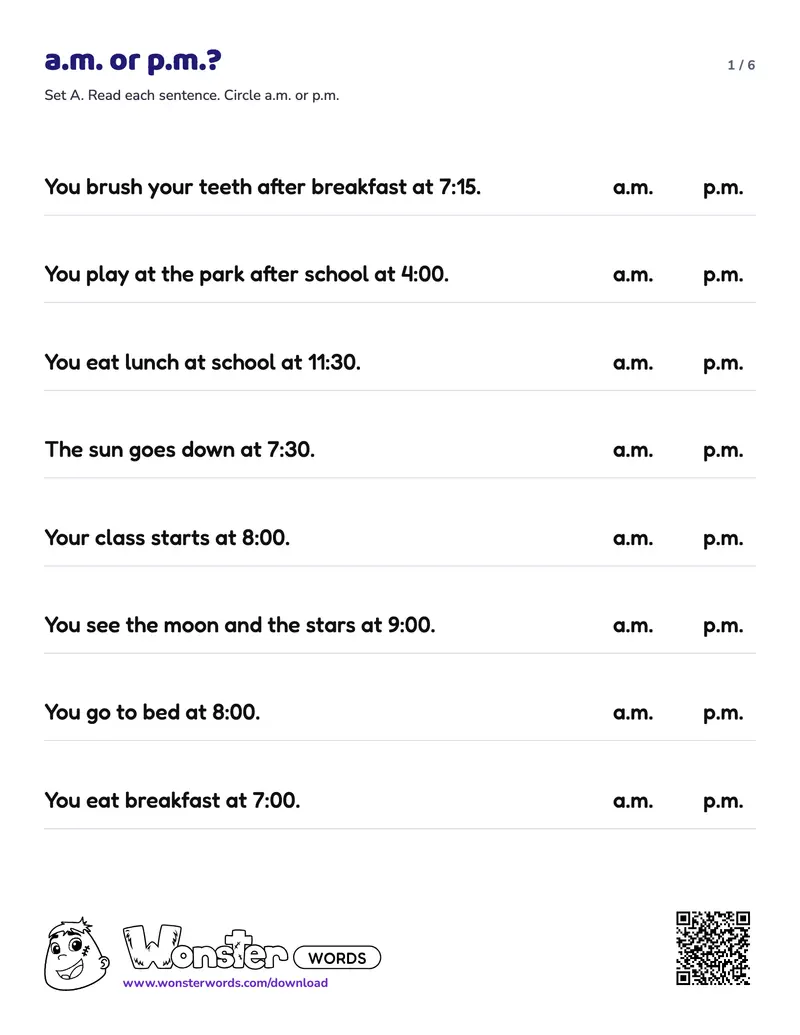
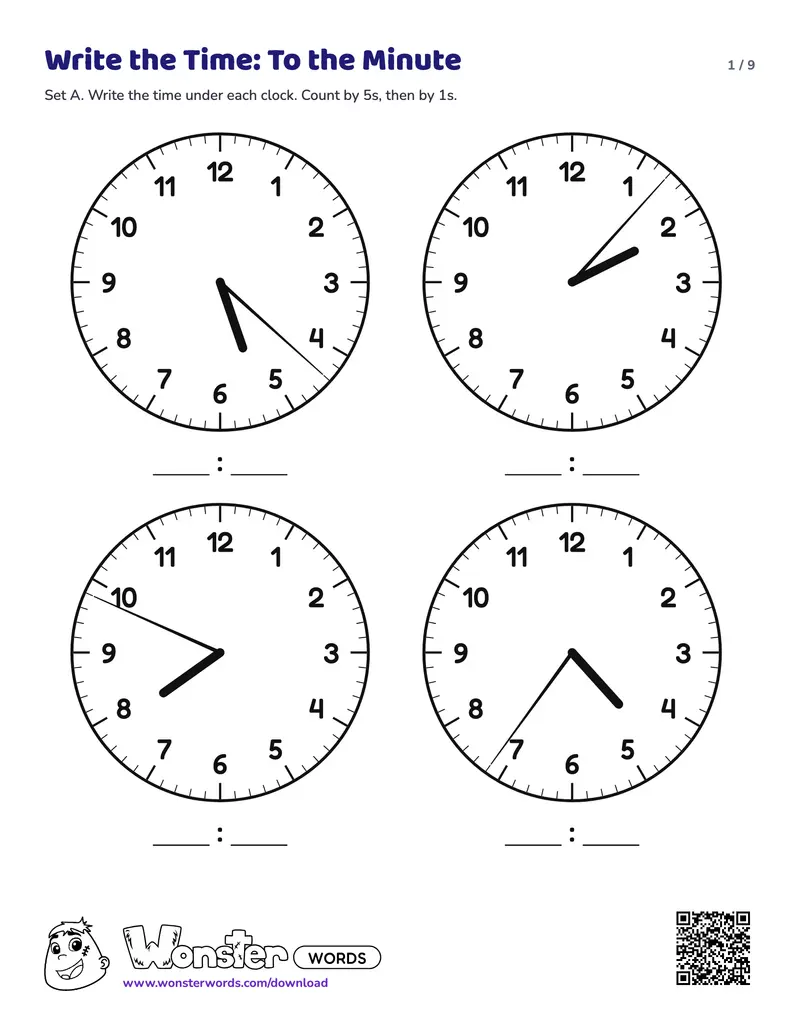
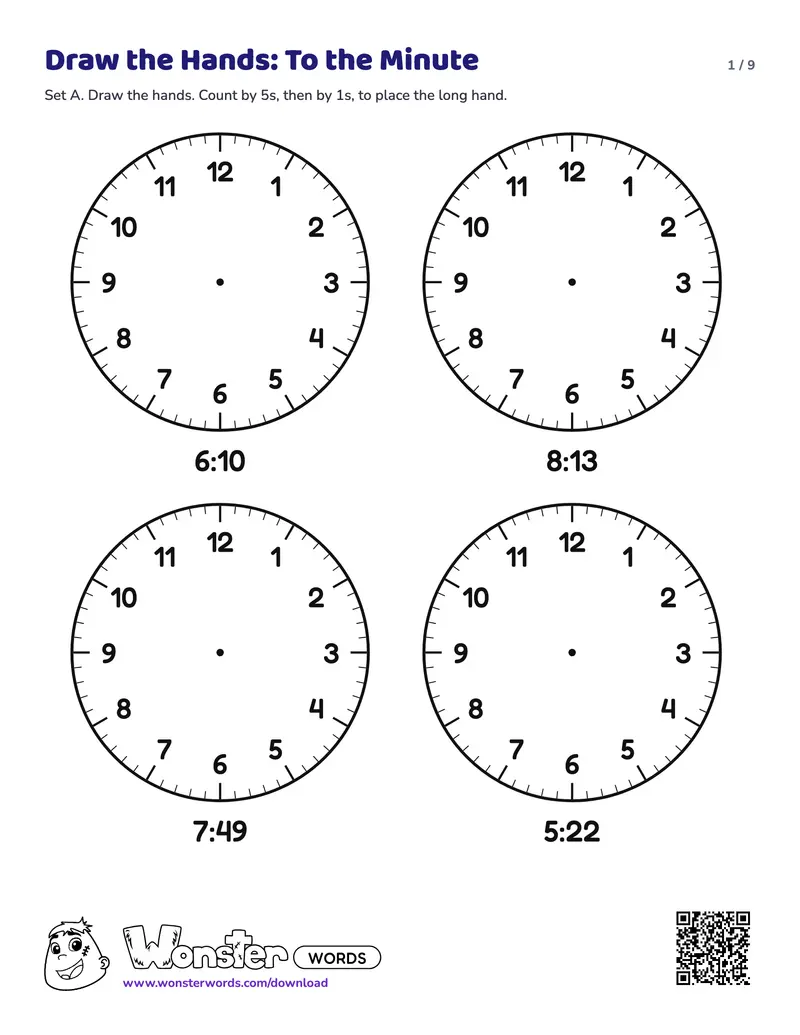
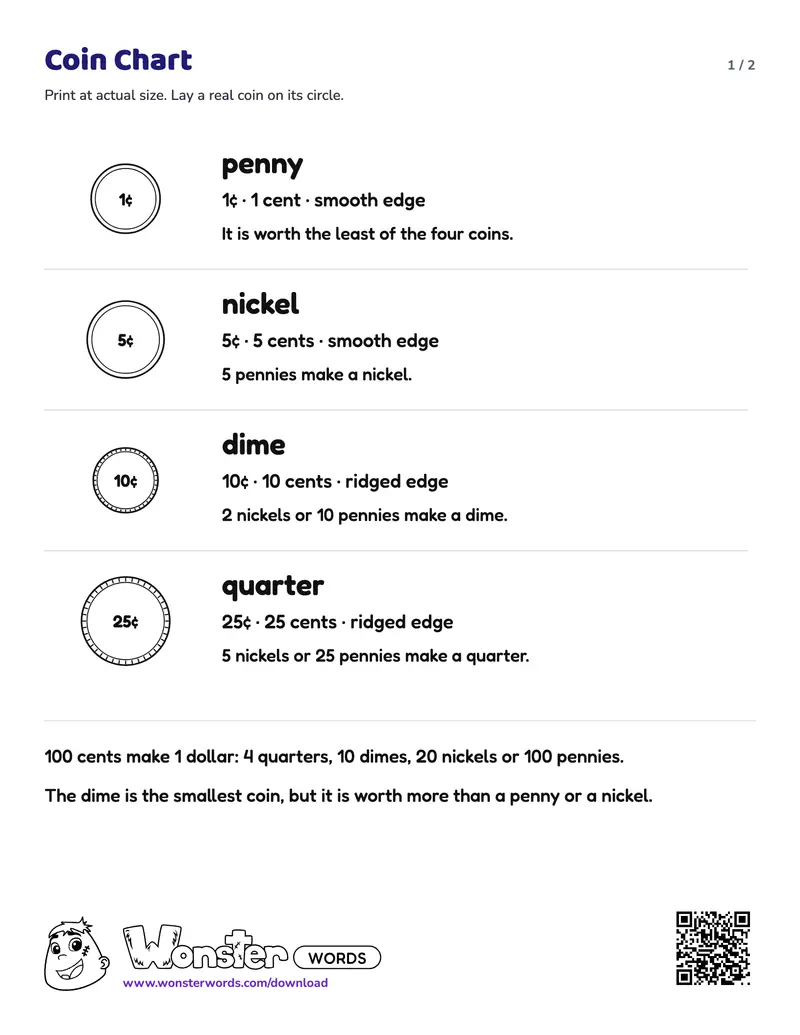
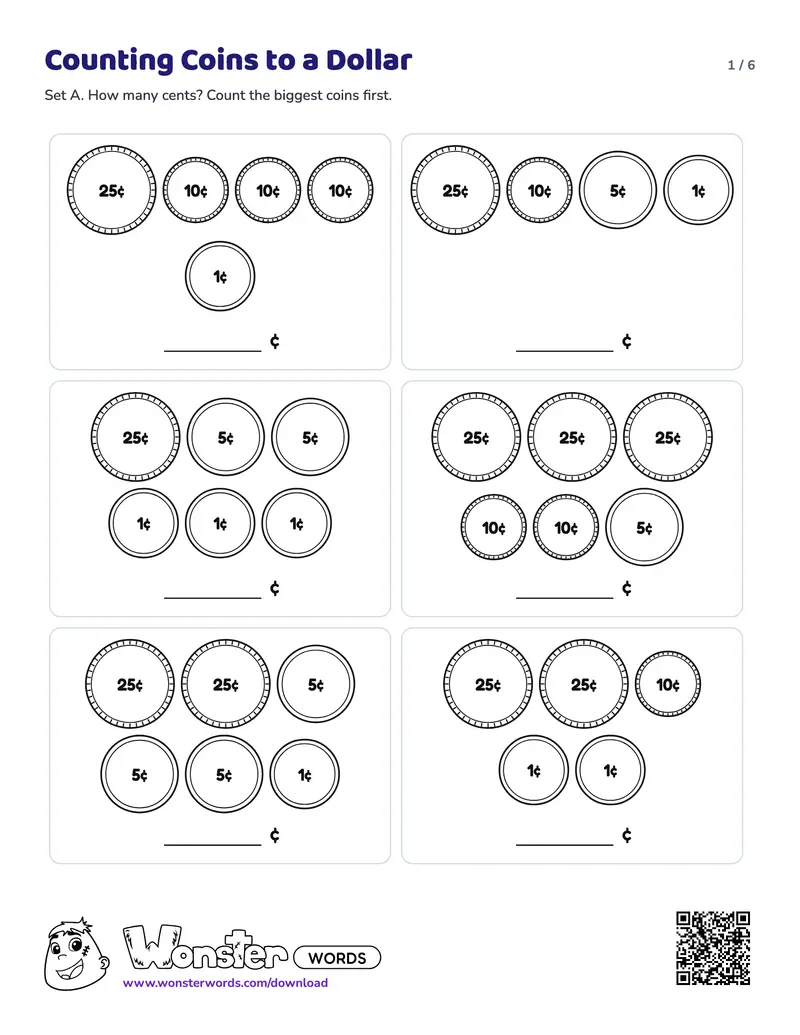
Second grade asks children to tell time “to the nearest five minutes, using a.m. and p.m.” (2.MD.C.7) and to solve word problems with “dollar bills, quarters, dimes, nickels, and pennies, using $ and ¢ symbols” (2.MD.C.8), both in the Common Core’s measurement standards. The clock sheets come from the telling time worksheets page: writing the time and drawing the hands to 5 minutes, a.m. or p.m., and blank clock faces for any time. Texas asks for time to the minute (2.9(G)), so its second graders go on to the two minute sheets. The coin sheets come from the money worksheets page, from the coin chart and counting coins to a dollar to making an amount, coins and bills, and word problems. The kitchen clock and shop games in the games section practice both with a real clock and real coins.
Free PDF · no sign-up
Feedback?Free printable second grade telling time and money worksheets
Clocks to 5 minutes, a.m. or p.m., and blank faces, then the two minute sheets for Texas, then coins and bills. Each PDF is free, prints in black and white, and ends with a page for grown-ups; every practice sheet has its answer key, and the clock faces and coin chart have nothing to answer.
- Write the Time: Five Minutes (PDF)36 clocks · answer key included · 9 pages
Preview page 1Preview
- Draw the Hands: Five Minutes (PDF)36 clocks · answer key included · 9 pages
Preview page 1Preview
- a.m. or p.m.? (PDF)32 sentences · answer key included · 6 pages
Preview page 1Preview
- Blank Clock Faces (PDF)23 clock faces · 6 pages
Preview page 1Preview
- Write the Time: To the Minute (PDF)24 clocks · answer key included · 9 pages
Preview page 1Preview
- Draw the Hands: To the Minute (PDF)24 clocks · answer key included · 9 pages
Preview page 1Preview
- Coin Chart (PDF)4 coins · 2 pages
Preview page 1Preview
- Counting Coins to a Dollar (PDF)24 collections · answer key included · 6 pages
Preview page 1Preview
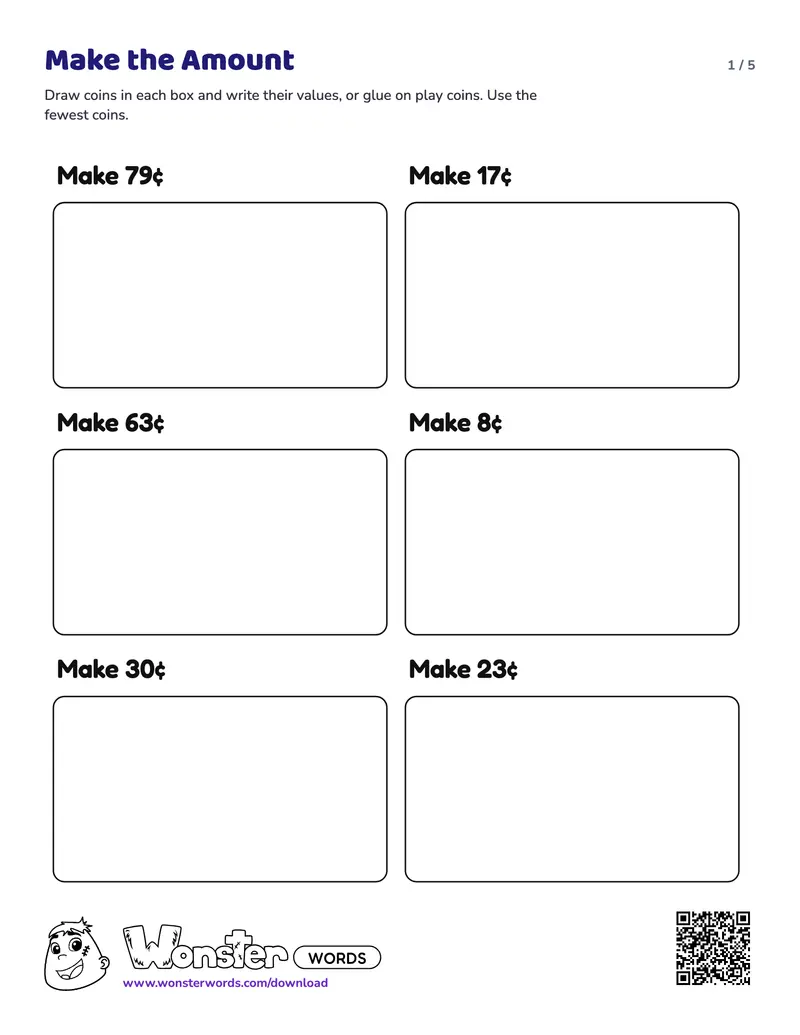
- Make the Amount (PDF)18 amounts · answer key included · 5 pages
Preview page 1Preview
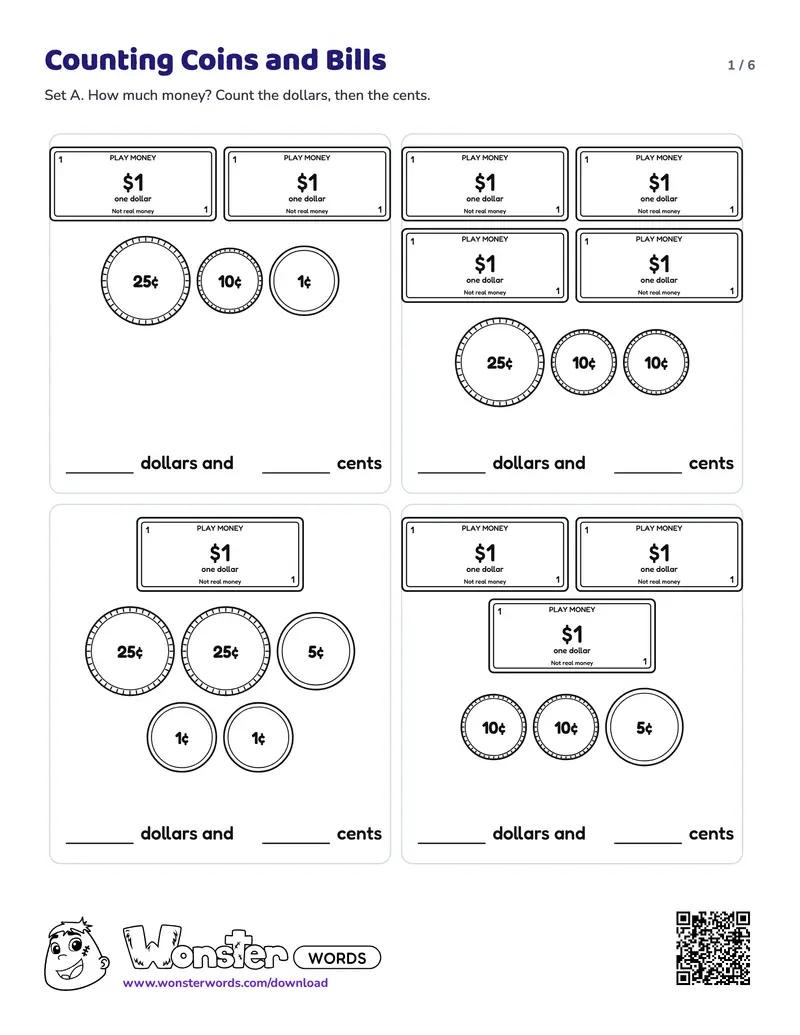
- Counting Coins and Bills (PDF)16 collections · answer key included · 6 pages
Preview page 1Preview
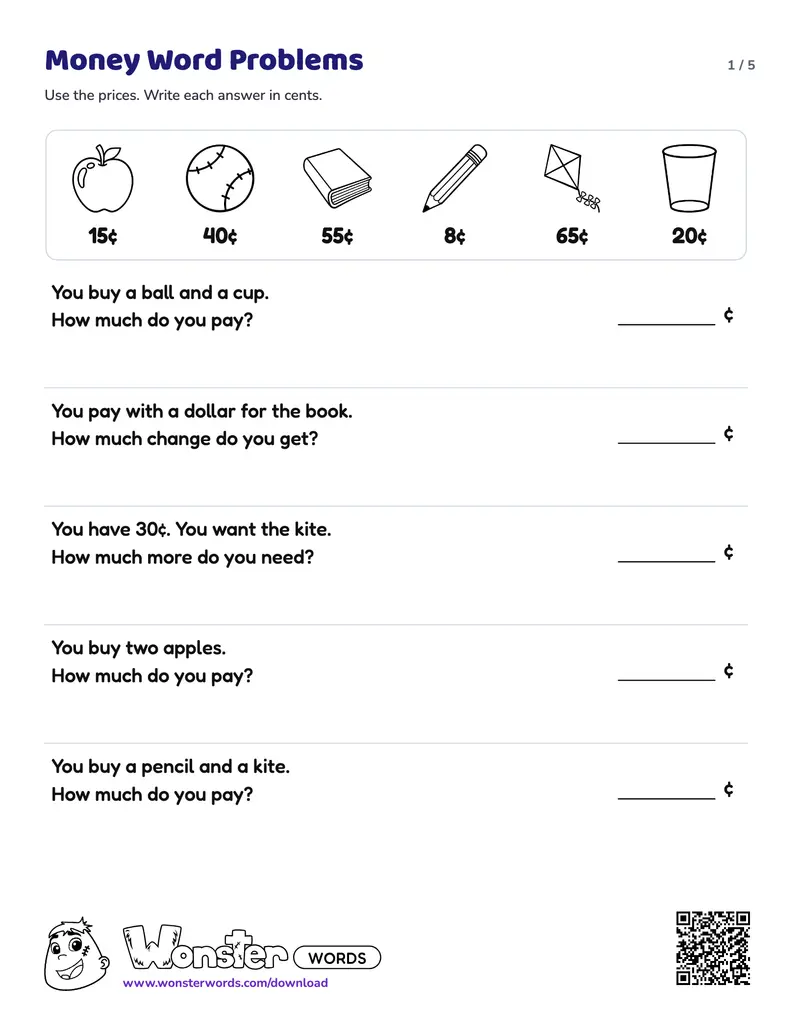
- Money Word Problems (PDF)15 word problems · answer key included · 5 pages
Preview page 1Preview
A child still on first grade’s skills, such as counting on within 20 or tens and ones to 120, will find those sheets on the first grade math page. Printable games, such as 2s, 5s, and 10s bingo, are in the games section. The sheets for the times tables and fractions as numbers are on the third grade math page.
Is my child on track in 2nd grade math?
A second grader who is still working some facts out in the fall is on time. Learning the facts takes three school years, and the Common Core’s recall standard is for the end of second grade. A second grader who still draws blocks for a three-digit sum is on time too, because 2.NBT.B.7 asks for models or drawings at that stage.
A quick check of where to start. Not a screening or diagnostic tool. Ask your child these 10 second grade math questions, in order, near the end of the year, and stop at the first one your child cannot yet do easily:
- “What is 8 + 7?” Easily means said without counting (2.OA.B.2).
- “What is 15 − 9?” Easily means without counting back every one (2.OA.B.2; Texas asks for it “with automaticity”, 2.4(A)).
- “What is 46 + 38? What is 72 − 25?” with your child saying how they did it (2.NBT.B.5).
- “24 birds were on the fence, 9 flew away, and 13 more landed. How many are there now?” (2.OA.A.1).
- “In 706, what does the 0 tell you?” (2.NBT.A.1).
- Count by 5s from 35 to 100, then by 100s to 1,000 (2.NBT.A.2).
- “Is 17 even or odd? How do you know?” (2.OA.C.3).
- “How many dots are in 3 rows of 4?” found by adding the rows (2.OA.C.4).
- Read a clock at 4:35 and say whether after school is a.m. or p.m. (2.MD.C.7).
- “2 quarters, 1 dime, and 3 pennies: how much money is that?” (2.MD.C.8; Texas 2.5(A)).
The first question that is not yet easy is where to start. Its skill has a tray of worksheets above and a page that teaches it in the table. Questions 9 and 10 go to tray 7 and the clock and coin games. A child who finds all 10 easy is ready for third grade’s first skills. If you have questions about how your child is doing, your child’s teacher is the person to ask.
Four common second grade math mistakes, each with the page that fixes it:
- Taking the smaller digit from the larger in every column, so 82 − 45 becomes 43. The answer is 37, and subtraction with regrouping shows the trade.
- Leaving out the zero, so a child writes 76 for seven hundred six. Point to the empty tens place, say “no tens”, and write a 0 there, as the place value page sets out.
- Counting the starting number when counting on, so 3 + 4 becomes 6. Counting on starts at the next number: how to use a worksheet so it teaches has the fix.
- Counting the pieces and stopping, so a shape cut into three unequal pieces is called thirds. Ask whether the pieces are the same amount and lay one on top of another, as the equal parts page shows.
If several questions are still hard late in the year, or math has become a fight, talk to your child’s teacher. The teacher can say what the class has covered and what to practice next. The guide to a child struggling with math covers what to ask and what helps at home. For a child who has started to worry about math itself, a gentler approach comes first.
For a second grader who finds the year easy, go sideways before going forward. Harder problems on the same skills come first: two-step stories, three-digit sums worked in the head, and “How many ways can you make 100?”. The next step after that is the times tables. Singapore Math’s Dimensions Math teaches the tables of 5, 2, and 10 in second grade and the 3s and 4s later that year, a year before the Common Core. The 2s, 5s, and 10s on the times tables page are the next step. None of this needs a test or a skipped grade.
2nd grade math activities and games at home
Second grade math practice at home works best with real things: cards, coins, a clock, a ruler, and the kitchen. Each game below practices one row of the grade table in a few minutes.
- Beat the fact (facts from memory). Go through the flash cards in two piles, “know it” and “work it out”, and watch the second pile shrink each week. More math fact games use cards and dice.
- Make 100 (adding within 100). Each player turns over cards to build two two-digit numbers, adds them, and the sum closest to 100 wins.
- Read the kitchen clock to 5 minutes (time, 2.MD.C.7). Count by 5s around the face from the 12, and say whether it is a.m. or p.m. In Texas, read it to the minute.
- Shop with coins (money, 2.MD.C.8). Price three things under a dollar, pay with coins, and work out the change. With the kitchen clock, this is how to practice time and money at home.
- Odd sock, even sock (odd and even, 2.OA.C.3). Pair up a pile of socks or snacks; one left over means the number is odd. The even and odd games add cards and dice.
- Arrays in the kitchen (equal groups, 2.OA.C.4). An egg carton and a muffin tin are rows and columns: add the rows to find how many. More are in array games.
- Measure the house (length, 2.MD.A). Guess the length of a table, then measure it with a ruler in inches and in centimeters. Then take a family vote and draw it as a bar graph (data, 2.MD.D.10).
- Bingo by 2s, 5s, and 10s (skip counting). The free printable multiplication bingo for the 2s, 5s, and 10s is labeled grades 2 and 3; in second grade, call the answers as skip counting.
- Fair shares of a pizza (equal parts, 2.G.A.3). Cut a pizza or a sandwich into halves, thirds, and fourths, and check that the parts are equal. Roll and Shade: Equal Shares, a free printable spinner game among the fraction games, practices the same shares on paper.
Use both worksheets and games, with the real thing first for time, money, and length. A game is practice out loud, where you hear how your child thinks, and a worksheet leaves a record you can look back at next week.
How often should my child practice 2nd grade math at home?
Second graders can practice math at home for a few minutes on most days, one skill at a time, in five short steps. The steps work for any practice sheet on this page.
Pick one skill, the first item on the check that is not yet easy
Use the quick check on this page to find the first skill your child cannot yet do easily, and print one sheet from the tray for that skill. One skill a sitting is enough.
Do the first row together, out loud
Work the first row side by side and ask "How did you get that?" after each answer. Counting every one, counting on, and using a fact your child already knows are different routes to the same answer, and the route tells you what to practice.
Keep tools on the table
Fingers, base ten blocks, a number line, or a hundreds chart are allowed on every page. The aim is fewer tools over the weeks, not none tonight.
Check it together with the answer key
Check each answer against the key while the problems are fresh, and let your child mark the page and fix the wrong ones. The same wrong answer twice is a pattern worth talking about.
Stop while it is going well, and move on when your child is accurate and calm
End the session before it turns into a fight. Go to the next sheet when your child gets the answers right and can say how, not when a page is finished. Timing comes last, only once your child is accurate, and only against their own last time.
No research sets a number of minutes or sheets for home practice. A few minutes on most days, stopping while it is going well, is a reasonable place to start, and one sheet at a time is enough. For step 3, the guide to counting on fingers explains when children usually stop using them.
Keeping it from being boring comes down to three habits: one skill a sitting, your child marking the page with the answer key, and a game from the section above when a sheet gets old.
Timing belongs at the end, because second grade is the year facts are recalled. Time a sheet only once your child is accurate, and only against their own last time. The What Works Clearinghouse recommends brief timed activities, each lasting “between 1 and 5 minutes”, once a child has worked on a skill over many lessons.
For homework, ask how the class does it before showing another way. Many second grade methods, such as the open number line and base ten drawings, look new to parents, and new math homework explains them. Let your child explain their work, and tell the teacher when homework takes much longer than it should.
Frequently asked questions
What are common math topics taught in 2nd grade?
Second grade math covers addition facts from memory and fluent subtraction within 20, place value to 1,000, adding and subtracting within 100 and then within 1,000, odd and even numbers, equal groups and arrays, measuring length with a ruler, telling time to the nearest 5 minutes, money, picture and bar graphs, shapes, and halves, thirds, and fourths of a shape.
How much should a 2nd grader know about addition and subtraction?
By the end of second grade, the Common Core expects a child to know every sum of two one-digit numbers from memory, to add and subtract within 20 fluently, and to add and subtract within 100 fluently. Within 1,000, second graders add and subtract with blocks, drawings, and a written method. Texas also asks for the subtraction facts within 20 to be recalled with automaticity.
What should children know about geometry by end of 2nd grade?
By the end of second grade, children name triangles, quadrilaterals, pentagons, hexagons, and cubes by their sides, angles, or faces, split a rectangle into rows and columns of equal squares and count them, and cut circles and rectangles into halves, thirds, and fourths. They also learn that equal parts of the same whole do not have to be the same shape.
What math concepts differ between 2nd and 3rd grade?
In second grade, children add up equal groups and the rows of an array, and in third grade that becomes multiplication, with every product of two one-digit numbers known from memory by the end of the year. Equal shares of a shape in second grade become fractions written as numbers in third grade. Adding and subtracting within 1,000 moves from models and drawings to fluency.
How do math requirements vary by state for 2nd graders?
Many states teach from the Common Core or standards based on it, and Texas uses its own standards, the TEKS. In Texas, second graders work with place value to 1,200 rather than 1,000, tell time to the minute rather than 5 minutes, learn eighths instead of thirds, sort odd and even numbers to 40, share objects equally as the start of division, and count coins up to a dollar.
Do the second grade math worksheets have answer keys?
Every practice worksheet has an answer key after its worksheet pages, with each answer in red where your child writes it, and a last page for grown-ups. The charts, mats, and cut-out sets have no answer key because there is nothing to answer. Every PDF is free, prints in black and white, and needs no account or email.
Are there free printable 2nd grade math worksheets for time and money?
Yes. The time and money tray on this page has 11 free PDFs: writing the time and drawing the hands to the nearest 5 minutes, a.m. or p.m., blank clock faces, two sheets to the minute for Texas, a coin chart, counting coins to a dollar, making an amount with the fewest coins, counting coins and bills, and money word problems. Each prints in black and white and needs no account or email, and every practice sheet ends with its answer key.
How often should 2nd graders use math worksheets to maintain interest?
Short and often works better than long and rare. A few minutes on most days, one skill and one sheet at a time, stopping while it is still going well, keeps practice from becoming a fight. When a sheet gets old, swap it for a card or dice game on the same skill for a few days.
Related guides
Standards this page teaches: Common Core: 2.OA.A.1, 2.OA.B.2, 2.OA.C.3, 2.OA.C.4, 2.NBT.A.1, 2.NBT.A.2, 2.NBT.A.3, 2.NBT.A.4, 2.NBT.B.5, 2.NBT.B.6, 2.NBT.B.7, 2.NBT.B.8, 2.NBT.B.9, 2.MD.A.1, 2.MD.A.2, 2.MD.A.3, 2.MD.A.4, 2.MD.B.5, 2.MD.B.6, 2.MD.C.7, 2.MD.C.8, 2.MD.D.9, 2.MD.D.10, 2.G.A.1, 2.G.A.2, 2.G.A.3 · Texas: 2.2(A), 2.2(B), 2.2(C), 2.2(D), 2.3(A), 2.3(B), 2.3(C), 2.3(D), 2.4(A), 2.4(B), 2.4(C), 2.4(D), 2.5(A), 2.5(B), 2.6(A), 2.6(B), 2.7(A), 2.7(B), 2.7(C), 2.8(A), 2.8(B), 2.8(C), 2.8(D), 2.8(E), 2.9(A), 2.9(B), 2.9(C), 2.9(D), 2.9(E), 2.9(F), 2.9(G), 2.10(A), 2.10(B), 2.10(C), 2.10(D), 2.11(A), 2.11(B), 2.11(C), 2.11(D), 2.11(E), 2.11(F)
Last updated
Looking for something else?
Looking for something else?